The Outsider Steps in

Trump’s victory raises more questions than it answers, but the first one is: how did the pollsters get it so wrong?

W
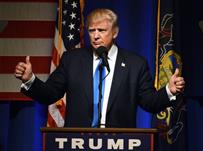
hen Donald Trump made a cameo appearance on stage the first night of the Republican National Convention in Cleveland, flashing the thumbs-up sign and declaring “We’re gonna win. We’re gonna win big,” he wasn’t kidding.
All along, the skeptics vastly outnumbered the believers. The Donald was inexperienced. He antagonized too many key-voter groups. He scared foreign leaders and the investment community.
But he clearly appealed to enough Americans and, after an Election Day that stretched into the wee hours of the night, Donald Trump once again took to the stage, this time in New York City, to give his victory speech. In two short months, on January 20, 2017, he’ll be sworn in as America’s 45th president.
Trump’s victory raises more questions than it answers, but the first one is: how did the pollsters get it so wrong?
“They were wedded to an old 2012 model. They thought the Obama coalition was perpetual. It wasn’t,” says political strategist John McLaughlin, one of Trump’s national pollsters, in email correspondence with Mishpacha. “Our campaign was built on a new coalition of working-class voters. The Rust Belt and Sun Belt came together to unite the Heartland of America and shocked the out- of-touch elites and Washington, DC establishment.”
Allan Rivlin is another political strategist who has earned the right to say I told you so. Back in January, Rivlin, a former senior advisor to the Bill Clinton administration who now heads Zen Political Research, warned Democrats not to underestimate the politics-disrupting talents of Donald Trump. On Election Day Rivlin told a news conference gathered at the Foreign Press Center in Washington, D.C. that he considered Trump the favorite all the way.
“It was really his race to lose if only he could stop getting in the way of his own campaign and run a pure insider-versus-outsider campaign, without making it about all the other things that helped keep him in the news, but turned off so many different groups,” Rivlin said.
Another question surrounding Trump’s victory is: will the garden variety of key Republicans who were card-carrying members of the #NeverTrump and Dump Trump movements drop their opposition and rally behind his efforts to remake the Grand Old Party into the Grand Old Populist Party?
Trump will begin his administration with an advantage few Republicans have ever enjoyed. He will be the first Republican since Herbert Hoover in 1928 to start his first term with a Republican majority in Congress, as the GOP retained control of the Senate, the House, and even added three more governorships. The Republican Party now controls two thirds of US states. This one-party domination provides Trump with an unprecedented opportunity to enact a sweeping new agenda, provided his deal-making skills in politics are as prolific as the ones that helped him make a fortune in real estate. But it’s not going to be easy. Even the great communicator, Ronald Reagan, needed Democratic defectors — the so-called Boll Weevil Democrats — to get his tax and spending reforms through Congress.
Much will be contingent on the relationships Trump forges with fellow Republicans during the two-month transition period between the Obama and Trump administrations. For the American people, who placed their confidence in Trump that he will cut their taxes, bring jobs back home, and provide better security and more law and order, his success or failure is a far more critical concern than why the pollsters flopped again.
A Trump presidency is guaranteed to be different, unpredictable — at least at the beginning — and fraught with uncertainty as he goes about the task of building his governing team.
If there is one good sign, it’s that in the last month of the campaign, Trump overcame the chaos that plagued his campaign and led to the ouster of two campaign managers until he found the right combination. As president, Trump cannot afford his cabinet, with sensitive positions like secretary of state, defense and treasury to be a revolving door.
John Fortier, director of the Democracy Project at the Bipartisan Policy Center in Washington, told reporters at the Foreign Press Center on Election Day that while Trump is “the most outside person we’ve ever had be a nominee for the major party,” at least on domestic issues, his top advisors are well-known and adhere to traditional Republican Party positions: “Trump will listen to them. So I don’t think it will be a free-for-all, but we are headed into somewhat unknown territory.”
(Originally featured in Mishpacha, Issue 634)
Oops! We could not locate your form.
RECOMMENDED


RELATED CONTENT

If Bibi is serving as a minister, his political life is over. But if he’s the prime minister, he can fight the charges while in office

Bibi is like the coach whose team is trailing with less than two minutes to go and has used his last timeout

The Center-Left managed to show that there is a real and viable anti-Netanyahu bloc

With already unaffordable healthcare premiums set to rise 25% or more, it’s no wonder the future of Obamacare became a hot-button campaign issue this election.

The country has seen some scurrilous campaigning before, arguably even worse than that of 2016. In each case, the nation and the democratic process survived

The scales of the court have tilted from the conservative to the liberal side, and the shift has been noticeable.
