
The Impact of As long as I Live
| December 9, 2020Rav Aharon Margalit shares the stories of people who dropped the excuses and said "I can"
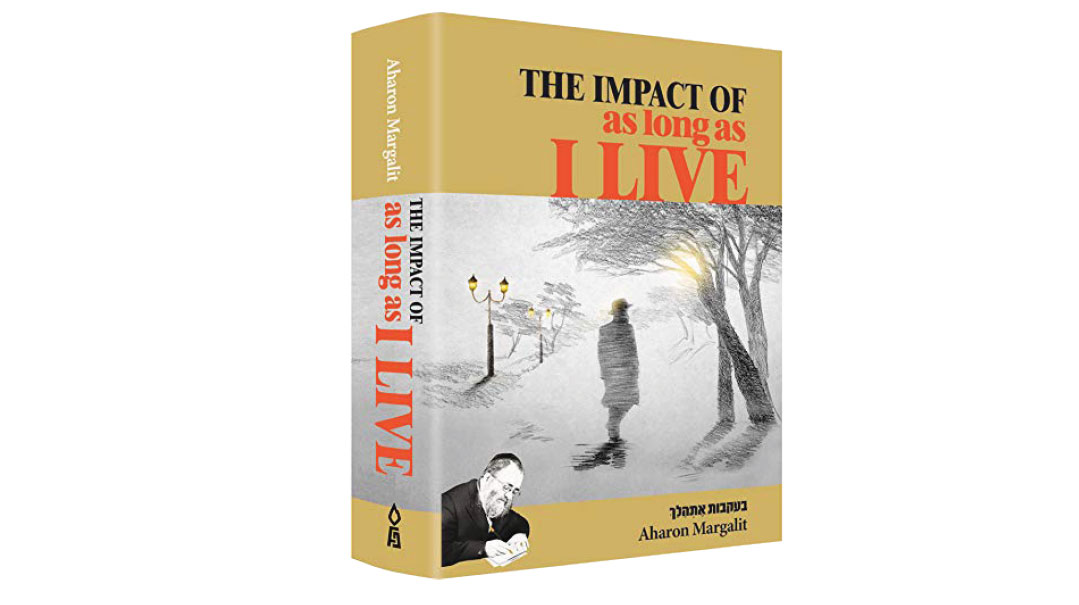

Book: The Impact of as long as I Live
Author: Rabbi Aharon Margalit
Publisher: Feldheim
How this book was born
This book was born amid the tsunami of reactions to my autobiography, As Long as I Live. I got feedback from readers all over the world, but there was one response I received over and over again that really bothered me.
Instead of readers becoming inspired and thinking, “I can try this too,” some readers’ reaction to my life story was, “You dealt with your difficulties like this because you have really special qualities. Your parents were incredible people. And you had special kochos and amazing inner resources.” They were implying that the story didn’t obligate regular people to seek ways to overcome their challenges.
This upset me. My parents were indeed special people, but they were ordinary human beings who became such through their efforts.
And I? I was a child who dealt with all the regular human emotions. I felt loneliness, abandonment, anger against my parents and my lot in life. As a small child left suffering alone on a shelf in a sanatorium, I wasn’t “special.” In this new book, I tell the incredible stories of regular individuals who said “I can.”
The soul of the book
The heroes of this book — all of them real people whom I met through my counseling — dealt with immense challenges: anger, illness, family feuds, and the like. They overcame them by looking inward, by creating a new reality through their own mindset.
Can we claim that they’re all special and privileged folks with preferential life circumstances? Definitely not. One man lost his parents and his only sister during his childhood and was left alone in this world, then went through a divorce. A teenager was immobilised by muscular dystrophy. A wife dealt with circumstances that unavoidably took considerable amounts of her husband’s energies away from the family. A son was left out of his father’s will.
They’re normal, flesh-and-blood people, who for some reason were chosen to live hard lives. But they prevailed. They left all excuses behind, and chose life. I’d like readers to do the same.
The hardest part to write
The hardest part was writing about the deep upset I felt toward my parents when I was left alone in the sanatorium, with only weekly visits. When I wrote my first book, my parents were still alive, so I didn’t mention that. But here, I felt it important that people understand that I wasn’t born with a silver spoon in my mouth.
It’s too easy to blame our parents for our difficulties in life, but I wanted people to know that they can release themselves from this mindset and go forward.
Hashem gives each of us all the tools we need — there are no mistakes in the hand we’ve been dealt, and we’re capable of making the best of our lives. This book is dedicated to my mother, who fought like a lioness for my future when doctors told her that I wouldn’t live, much less move or function.
My writing space
I write when everything is quiet, usually very late at night. A couple of years ago, we moved to Ashdod to be near our children. Our apartment building has a rooftop that is cooled by the sea breeze even at the height of the Mediterranean summer. I go up there, without a phone, at 12 a.m., and sit and write for a couple of hours.
My writing mentors
I’ve learned so much from my editorial team. Reb Chanoch Regal, a”h who was so tragically taken from his family in a fire earlier this year, was the one who really made my books a reality.
Moment of truth
The crucial moment of each of the true, dramatic stories in the book is when the person realizes that he’s not the pitiful, helpless victim he thought himself to be. The reins are in his hands.
What I left unwritten
Some of the situations that I came across were shalom bayis issues. I know that teenagers and young people read my books too, so I gave the manuscript to a rav to check that there was not a word written or a topic spoken about that shouldn’t be published. I strongly believe that we have to be careful about not exposing our children to adult-only matters.
Surprise fan
My original book was published in Hebrew, Yiddish, English, French, and Spanish. I also published a series of Hebrew comic books named “Areh’le,” which presents the story for children, and another autobiography geared toward the secular public. So children and adults stop me wherever I go.
But once, when I was visiting the home of Rabi David Abuchatzeira shlita in Nahariya, he said to me, “Reb Aharon, your book does more for people than 20,000 of my derashot!” That gave me a big push to keep writing.
A half–year wait
I’m so busy that I never get to see the sea here in Ashdod. And I don’t have time to read much either. I barely keep up with the weekly publications. I love the Yom Tov story supplements, but they wait next to my bed for six months until I get around to them! As a child, though, I read endlessly, and I feel that gave me a fantastic education.
Eighty emails a day
I answer around 80 emails a day, sometimes spending up to four hours responding to people’s questions and problems, trying to give chizuk. But I don’t know who I’m in touch with — I’ll never ask about personal details.
(Originally featured in Family First, Issue 721)
Oops! We could not locate your form.
RECOMMENDED


RELATED CONTENT

Against the backdrop of the California Gold Rush, life on a Louisiana plantation, and Cherokee clan rivalries, the characters struggle with their own family dramas and dilemmas

M. Kenan shows her versatility as an author, crossing cultural worlds with integrity while remaining in the modern age


The hardest aspect was attempting to encapsulate someone so much larger than life in words

We’re all empowered when we realize we are enough and we have the tools and resources to achieve inner personal greatness
