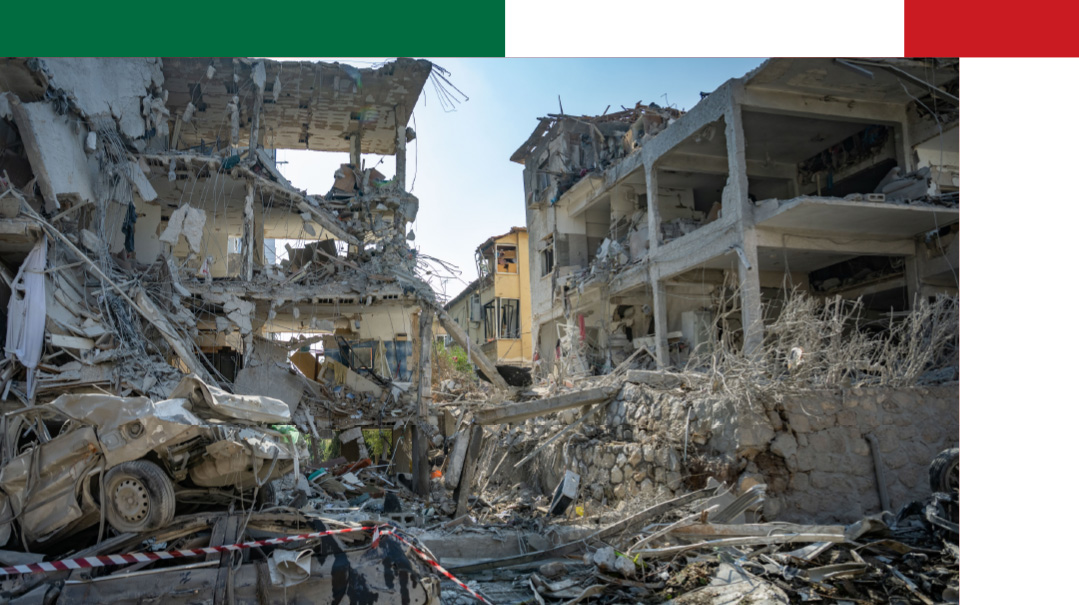
When the Iranian missile struck the building in Ramat Gan at 5:42 a.m. on Sunday, June 15, Shlomo Chai thought it was the end.
The 67-year-old was in his protected room, as required. But after the explosion, when he tried to leave, he discovered that a heavy concrete slab had fallen across the exit from the safe room, completely blocking it.
About nine miles away, in Bat Yam, Avi found himself in a similar situation — trapped in his shelter after a direct hit to the neighboring building caused a concrete slab to collapse on the door.
The two men didn’t know each other, but their fates were connected: They were part of the massive rescue operation Israel’s Home Front Command has carried out since the Iranian regime’s murderous retaliation for the Israeli attack on its nuclear weapons facilities.
The deadly barrage on the night of June 14–15 was part of Iran’s “Operation Truth Guarantee 3” — the mullahs’ third direct attack on Israel since the war began, in response to the Israeli operation against Iran’s nuclear advancements. In five barrages launched over 72 hours, Iran fired more than 350 ballistic missiles at Israel. Most were intercepted, but around 20 breached Israeli defense systems and struck civilian targets in central and northern Israel.
As of press time, the civilian death toll stands at 24, with around 200 injured, and dozens still trapped under rubble in five main impact zones — Ramat Gan, Bat Yam, Tel Aviv, Rechovot, and Rishon L’Tzion. The Sunday morning attack was the first time Iranian missiles caused such extensive destruction in central Israel and the first time the Home Front Command had to conduct a large-scale rescue operation in the heart of Gush Dan.
Master Sergeant Ro’i from Battalion 951 of the Home Front Command’s Search and Rescue Unit was one of the first to arrive at the Ramat Gan impact site.
Together with Master Sergeant Natan and Sergeant Major Moshe, they were summoned immediately after the report of the direct hit. What they found was a scene of utter devastation: nine buildings damaged, dozens of apartments completely destroyed, overturned vehicles in the street, and shattered windows hundreds of meters from the impact point.
The missile hit the center of an old residential building built in the 1960s, causing partial collapse of three floors. In a preliminary check, rescue forces identified at least three points where people might be trapped. One of them was Shlomo Chai’s safe room. They could hear his cries for help.
The first task was getting an engineer’s approval that the structure wouldn’t collapse during the rescue. Only after an hour and a half of structural checks could the soldiers go in. Shlomo was in the shelter — which saved him from the explosion itself — but the fallen slab completely trapped him. The team needed to move tons of concrete without triggering a complete collapse.
Heavy machinery arrived only after two hours of manual labor using light equipment — jackhammers, rescue hammers, and whatever else was available. Rescue workers kept speaking with Shlomo through small openings to ensure he was conscious and not losing hope.
After hours of grueling work, they managed to open a narrow passage through which they could extract Shlomo. He came out with light scratches — but alive.
At the same time, in Bat Yam, a parallel drama unfolded.
Staff Sergeant Dvir from the Home Front Command’s rescue force arrived at the scene about five minutes after a direct hit on a residential building on Herzl Street. The damage there was even worse — the missile struck a high-rise building, causing near-total collapse of five floors.
The air was thick with dust, shattered glass everywhere, overturned vehicles. Avi was relatively okay — his shelter was in a nearby building that was hit by the shockwave and shrapnel, but it hadn’t collapsed. The problem was that the vibrations caused a concrete slab in the corridor to fall directly on the shelter door.
The solution was creative. Instead of trying to move the heavy slab — which might have caused additional structural damage — Dvir decided to carve an opening through the side wall of the shelter. Using a small concrete cutter, he and his team worked for two and a half hours, centimeter by centimeter, slowly and precisely, to avoid further compromising the building.
Eventually, they opened a hole approximately 50 by 70 centimeters. Avi came out with minor facial injuries, from shrapnel that had come in through the air vents — but he was alive.
Behind the scenes of these two rescues was a complex system involving dozens of units and hundreds of soldiers.
For the first time since this war began, the Home Front Command activated its full array — including advanced drones from Unit 9900 of the Intelligence Directorate, which provided aerial situational images and helped identify additional rescue hotspots.
This wasn’t just targeted rescue; it was a large-scale operation across five main impact zones. In the first 48 hours, more than 600 personnel were on the ground — rescue soldiers, engineers, medics, and special forces. The main challenge was timing: In every case of someone trapped under rubble, the first few hours are critical.
Priority was given to cases where there was contact with those trapped — like Shlomo and Avi. But in parallel, thorough sweeps were conducted in areas where no voices were heard, in case there were unconscious victims. The work was done with rescue dogs, sensitive listening devices, and every available technology.
In total, 11 people were rescued alive from beneath the rubble in all the zones. In Bat Yam, it took an entire day to clear the site, while forces continued scanning for trapped individuals, evacuating civilians, and compiling a list of missing persons.
Yehuda Kuper from the Home Front Command’s Rescue Battalion was part of the team in Ramat Gan.
In a conversation afterward with Mishpacha, he described the mixed feelings of rescuers — on one hand, shock and horror at the horrific destruction; on the other, elation at each successful rescue, a small victory over terror.
Kuper recalled the moment the call came in. He was home on Friday night, eating cholent with friends, when he got an alert from the Home Front Command he’d never seen before.
“I knew immediately this was different,” he said. “All week people had been talking about an attack on Iran, but each night passed without incident. And then suddenly — this.”
His commander instructed him to get ready and head to the battalion’s staging area as quickly as possible. The attack on Iran had begun, and they had to cover their assigned area in case of disaster. Kuper serves in the Data Collection and Casualties department of the Rescue Battalion. In the event of a missile strike on a building, his role is to extract bodies from beneath the rubble.
When he arrived at the scene in Ramat Gan, he saw devastation that reminded him of the Second Lebanon War when he was a teenager. The missile had hit the center of a very old building, half of which was gone, rubble everywhere. People were screaming for help, large forces arriving, total chaos. He saw people in pajamas, staring at what used to be their homes, crying.
Roee, Natan, and Moshe from Battalion 951 spoke of the complexity of the work at the scene. Their first sight was apocalyptic, with destruction like they’d never seen. But beyond that, they remembered the precise collaboration between all forces — Home Front Command, police, fire department, Magen David Adom, and special units.
The key lesson from that night is clear to everyone involved.
The difference between life and death can sometimes come down to a split-second decision. Shlomo and Avi survived because they went into their shelters as required. Others who didn’t make it, or who didn’t hear the siren, did not survive.
At the end of the operation, the Home Front Command published detailed statistics: there were two dozen killed and hundreds wounded, but 11 rescued alive, and more than 150 families evacuated from damaged homes. Behind the numbers stand personal testimonies from people who went into their protected rooms — and the dedicated work of hundreds of rescuers who never gave up.
The Iranian missiles on the nights of June 14–16 wreaked deadly destruction. But they also revealed the impressive resilience of Israel’s rescue system, the daily heroism of people who choose to save lives in the most dangerous places — and of course, abundant siyata d’Shmaya.
The war with Iran is still ongoing, and the threat to Israel’s home front remains. But the stories of Shlomo and Avi, and of their rescuers Ro’i, Natan, Moshe, and Dvir, remind us that even in the darkest places, light can be found.
We can only begin to decipher the disturbing scenes of Wednesday’s lethal raid on the Capitol by asking the right questions: What allowed these events to morph from the unthinkable to reality?
How do police, entrusted with crowd control, make their split-second decisions in the face of a violent rioting mob? Las Vegas Metropolitan Police Department (LVMPD) Patrol Lieutenant Steve Riback shares some of the behind-the scenes training protocol and other tools to keep the fear away and his colleagues safe