Waterways
| June 13, 2012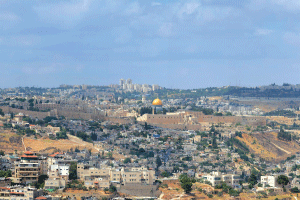 Not so long ago running water used to mean rivers and streams — not pipes and faucets. Consequently towns tended to spring up around reliable water sources.
In Jerusalem water was even more of a necessity. Just think about how many washing cups get filled each day in the average Jewish home. Imagine then how much more water was necessary in the times of the Beis HaMikdash when thousands of Jews ascended to Jerusalemfor the Yamim Tovim. Beyond their personal needs these olei regel had to immerse in a mikveh prior to bringing sacrifices. The korbanos also required gallons upon gallons of water; Chazal explain that the floor of the courtyard was flooded to ensure it be cleaned of all the blood.
The Gichon Spring at the foot of biblicalJerusalemwas the only reliable year-round water source in the entire region. During the times of the First Beis HaMikdash this water supply was sufficient but by the time of the Second Beis HaMikdash the Gichon Spring could no longer meet the needs of theHolyCity. The Jews had a real problem on their hands.
So how did they deal with it? For the answer we turn to Avi Flax our tour guide for the day. He meets us inEast Talpiot in a neighborhood called Armon HaNetziv at the Haas Promenade. This location has been identified as the most likely place from which Hashem showed Avraham Avinu Har HaMoriah where the Akeidah would take place.
Looking outJerusalemunfolds in front of our eyes %%%[2261 2265]%%%. Not far in front of us at the foot of the hill on which we stand is the Peace Forest so named because the line of trees at its edge was the border between Israel and Jordan from 1948 till 1967. Letting our eyes roam eastward brings us to Wadi Assal; this is most likely the Atzal of which Zechariah spoke the place where the Jewish Nation will seek refuge as they fleeJerusalemduring the war of Gog and Magog.
A little further in the distance we enjoy a spectacular view of theOldCity. To the west where theOldCitywalls begin isMountZion where David HaMelech is said to be buried. To the east Mount of Olives (Har HaZeisim) the oldest Jewish cemetery in the world.
Behind theOldCity we get a glimpse of French Hill built on the remains of Nov city of the Kohanim where the Mishkan stood until Shaul had the Kohanim killed. Further east lies the sprawlingHebrewUniversitycampus onMountScopus(Har HaTzofim).
But back to the water dilemma. We leave the promenade and walk down a path towards the Hasmonean Aqueduct Tunnel operated by the City ofDavidorganization. It’s a water tunnel now dry built by the Chashmonaim at end of the second century BCE. Before paying the entrance fee we first have to see if we can fit inside the tunnel by passing through an iron gate (fortunately we do). We tighten our shoelaces and take out our flashlights preparing for adventure. (Although the rest of today’s trip is family friendly this tunnel is not for very young children nor the claustrophobic!)
To read the rest of this story please buy this issue of Mishpacha or sign up for a weekly subscription.
Oops! We could not locate your form.
