Time Tunnel: Back to the Old Neighborhood
| July 17, 2013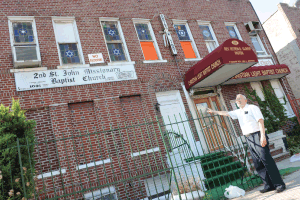 Driving back toBrownsvilleisn’t what I signed up for when I took this job. The week before we are slated to go a gun battle in broad daylight makes headlines and I read it wondering if this isn’t an assignment better suited to Aharon Granot.
A prominent Satmar askan Rabbi Abe Friedman arranges for an armed security guard to join us and along with photographer Meir Haltovsky clutching his costly camera close to his chest we park and step out onto a cracked sidewalk.
TheBrownsvilleof today bordered by Bedford-Stuyvesant andCrownHeights is 80 percent African-American with the remainder of the population Hispanic or Asian. It has the highest murder rate inNew York City and until this year it had no high school of its own.
But back when Zeidy was a child in the late 1930s it was predominantly Jewish with a fair share of Italians and a smattering of Irish. It was a colorful neighborhood with shops and restaurants lining the main thoroughfares and shabby houses on the side streets. Among the housewives gathered at the open-air pushcart market on Belmont Avenue Yiddish was the language of choice for chatting and haggling over the price of pickles or salami. At that time there were more than 70 shuls and various social groups — landsmanschaften — that dealt with visiting the sick and burial services among other things.
On Sunday mornings the locals who worked as painters and masons factory workers store owners and carpenters stood on street corners to talk shop and politics. Most had left traditional Yiddishkeit in the shtetl. The neighborhood was overwhelmingly socialist in outlook; they believed in working hard for a government they respected many of them still carrying the ideals of the Eastern European countries
from which they’d been chased.
Today there are no such conversations. The people walk too quickly many of them looking down and lone individuals dot the stoops many of them wearing distant expressions. There are piles of trash strewn randomly long strips of razor wire blocking off properties crumbling buildings with bars on their windows beckoning with poorly hung “For Rent” signs. There is loud music loud clothing and a sense of restlessness rising like heat from the sidewalk.
To read the rest of this story please buy this issue of Mishpacha or sign up for a weekly subscription.
Oops! We could not locate your form.
