Thieves in the Night
| May 30, 2012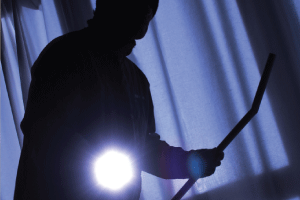 You’re planning a two-month escape to a bungalow colony or maybe just going out for the night. But are you prepared for the possibility that someone is watching your home tracking your moves waiting for the minute he can pry open a window or jimmy a lock and clear out your valuables? According to crime-watch statistics burglaries increase about 10 percent during June July and August. So how can you protect your home and still be able to leave — or make sure no one breaks in while you’re still there? Do you know what vulnerable points a burglar looks for and whether your home is an easy target?
One way to understand the mindset of a thief hunting for a break-in opportunity is to talk to someone who’s been on the “other side.” Yonatan — a 20-something American Jew and former convicted burglar who served 18 months in prison on a plea for weapons charges after facing charges of grand theft — fits the bill.
“Appearance is everything. You want to make your home look as uninviting as possible” insists Yonatan. “You don’t want your home to look neglected. Cut the grass. Don’t let newspapers pile up in your front yard or mail pile up in your mailbox. Thieves sometimes go through a rich neighborhood looking for piles of newspapers.”
Although to my mind a home that looks neglected is uninviting Yonatan is quick to point out that when it comes to discouraging would-be thieves the opposite is true. Does that mean if we have a neighbor taking in our mail or if we decide to stay home this year then we’re in the clear?
“Not necessarily” says Yonatan who spoke to Mishpacha on condition of anonymity although he acknowledged that “this is not my life anymore and I have nothing to hide.” Yonatan has served his sentence and reentered society and as someone intimately familiar with the psyche of a burglar he offers homeowners a wide range of tips that he hopes will keep people safe.
“Even if you’re not on vacation but just at work people watch” says Yonatan. “A neighbor might have a teenage hooligan kid maybe with a drug habit and the kid is noticing who goes to work and at what time. You have to make it so that anyone looking at your home says ‘Whoa there’s no way I can do this without getting caught.’ It’s vital to install as many deterrents as possible.”
A deterrent is anything you set up to protect your house from crime even the classic “leave music playing or a timer on the lights” security strategy.
“A lot of the old-fashioned things still work” Yonatan maintains. “Still you need really good locks on windows and doors including sliding doors. Otherwise it’s too easy for someone to slip in and out. The more you invest in locks and other security devices the harder they’ll have to work to get in. If they have to bring more tools to break in and do the job they’ll worry about making noise and leaving evidence.”
Asking your neighbors to check up on your home regularly while you’re away can also be a helpful deterrent — if you have neighbors who are completely trustworthy.
“If you can genuinely trust your neighbors you can ask them to keep an eye on the house. Really the human eye is the best because they know who should be around. But if you give that information to the wrong person it might come back to bite you in the foot ” warns Yonatan.
This issue can be significant no matter where you live. According to Yonatan’s experience 60 percent of all burglaries are inside jobs where the perpetrator either knows the victim personally or knows someone who knows the victim.
“I’m not trying to make everyone paranoid I’m just trying to be realistic” he asserts. “I don’t trust just anybody.”
To read the rest of this story please buy this issue of Mishpacha or sign up for a weekly subscription.
Oops! We could not locate your form.
