Taking the Plunge
| July 9, 2014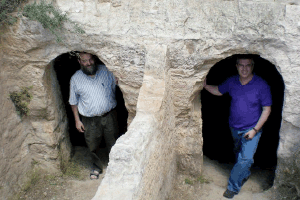 A mikveh is one of the first structures built in any Jewish community and is a central pillar of family life so it would be logical that — on our numerous journeys over the years researching ancient Jewish districts — we’d discover many of these ritual baths. Well we haven’t been disappointed.
While the mikveh had many more purification functions during the time of the Beis Hamikdash than it does today it’s still central to Jewish ritual. Family purity is the mikveh’s primary use but it serves other functions as well. All new eating utensils created by a non-Jew must be immersed before being used many sofrim immerse before they write G-d’s name on the parchment and most men immerse before Yom Kippur while some immerse every Erev Shabbos or even daily. So it’s no wonder that wherever we found a shul we could assume there would have been a mikveh in close proximity.
Our “mikveh quest” got a boost recently when we were in the Alsace region on France’s eastern border visiting small communities old shuls and some of the oldest matzah factories in the world. We arrived at a lovely restored old shul in Thann a small town of under 8 000 people that had a Jewish community dating back to the 12th century. That shul had quite a history: In 1818 the Jewish villagers build the town’s shul in a barn which was replaced by an imposing structure in 1862. Following bombings in World War I it was restored in 1924 plundered during the German occupation restored after World War II and again in 1975. Today not one Jew lives in the town but after our non-Jewish contact unlocked the doors for us she mentioned something she thought might be of interest. Just two weeks before workers were digging the front yard of the shul and discovered what seemed to be some sort of ancient bath. A mikveh!
We clambered down into it bombarded with questions by the curious townspeople although we weren’t able to find out too much information about the Thann mikveh. Apparently it was built in front of the shul but fell into disuse when the rabbi’s house was built right next to it. Still that got us thinking: maybe we should compile the information on all the mikvaos we’ve come across and present that to our readers. While initially dubious about the amount of material we might have on the topic as we began to think about what we’ve seen over the years we realized we could practically write a book — so we decided to take the plunge.
Oops! We could not locate your form.
