Shielded from Sin: Heavenly Aid for the Righteous
| September 27, 2012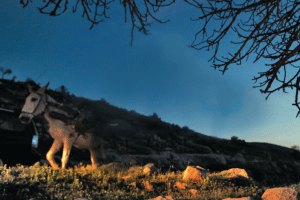 A number of verses in Tanach convey the notion that tzaddikim are granted special Divine protection. Several Talmudic passages indicate that sometimes this protection consists of the tzaddik being prevented from inadvertently transgressing halachah. The Talmud presents this principle in curious terms. If even the animals of tzaddikim are prevented from acting in ways that violate halachah for people it stands to reason then that their owners are certainly spared from such transgressive behavior. To whose animals does the Gemara refer? The Talmud relates that the famous Tanna Rabi Pinchas ben Yair once lodged at an inn where his donkey was given fodder. The donkey refused to eat even after the food was made more palatable and cleared of pebbles. Rabi Pinchas ben Yair then asked his hosts whether tithes had been separated from the grain as required by halachah. It turned out that tithes had not been separated and once this was rectified the donkey ate the feed placed before it. Hence the Talmudic adage: if G-d does not bring about spiritual mishaps through the donkey of a tzaddik like Rabi Pinchas ben Yair surely even an inadvertent transgression of halachah would not befall the tzaddik himself.
A similar albeit lesser-known story is that of the donkey belonging to Rabi Yosé of Yokrat which exhibited an unusual habit. When hired out by its owner for labor it would work throughout the day and in the evening the appropriate rental fee would be placed upon it and it would then come back to its owner. But if too much or too little money was placed on the donkey it would not budge. Once a pair of shoes was inadvertently left on its back and the donkey refused to move. Only after the shoes were removed did the donkey proceed to return to its master.
In several Talmudic anecdotes the possibility that a distinguished personality committed a transgression is considered but rejected based on the axiom that Hashem shields tzaddikim from sinning inadvertently. Among these are cases in which a Tanna or Amora was said to have partaken of untithed produce meat torn from a living animal or improperly slaughtered meat.
To read the rest of this story please buy this issue of Mishpacha. To sign up for a weekly subscription click here.
Oops! We could not locate your form.
