Three doses of inspiration to lift the spirit and soul
Saved: Stories to Inspire
Elisheva Storch
IT
was the coldest night Atlanta, Georgia, had seen in eight years. The kind of night where the cold feels alive, biting through walls and windows, demanding attention. A cold we definitely were not used to, having spent ten years in Eretz Yisrael.
Inside our home, though, all was warm and peaceful. The Shabbos candles still flickered faintly, the children were asleep, and my husband and I were winding down after the seudah.
Until the beeping began.
Somewhere around midnight, a shrill beep, beep, beeeeeep pierced the quiet. My husband, Shlomo, dragged himself out of bed to investigate. It turned out to be an old carbon monoxide detector plugged into the hallway outlet.
We stood there in the dark, whispering back and forth. Our newer, hardwired detectors hadn’t gone off, so surely this outdated one was malfunctioning. Confident that modern technology was on our side, we went back to bed.
But the peace didn’t last long.
Another round of beeps. Then another.
Each time, I checked on the kids, placing my hand on their backs to assure they were breathing. Each time, we decided it was nothing. This went on throughout the night in a pattern of rather thoughtless futility.
At around eight Shabbos morning — the temperature outside a record-breaking eight degrees Fahrenheit — our “fancy” system suddenly came alive: “Carbon monoxide detected. Go to fresh air. Carbon monoxide detected. Go to fresh air.”
The words hit like a thunderclap. We weren’t half-asleep anymore. We weren’t confused. We were terrified.
I shook the kids awake, trying to sound calm even as my heart pounded. “There’s something in the air,” I said. “We need to go outside right now.”
We rushed across the street to our dear friends and neighbors, while Shlomo called 911. Within minutes — a record response from the Dekalb County Fire Station — a hook-and-ladder truck pulled up, lights flashing against the frozen morning sky.
Five firefighters entered our home, moving swiftly and deliberately, handheld detectors in hand. The readings were high. Dangerously high. The source — a leak in our furnace. They shut everything down, opened the windows wide, and waited until the levels dropped. Then, as quickly as they’d come, they were gone, leaving behind the echo of sirens and an overwhelming sense of gratitude.
We sat huddled under blankets, the house frigid but our hearts full. The what-ifs swirled endlessly. But beneath the fear was something deeper — a quiet awe at the mercy of Hashem, Who had spared us from what could have been unthinkable.
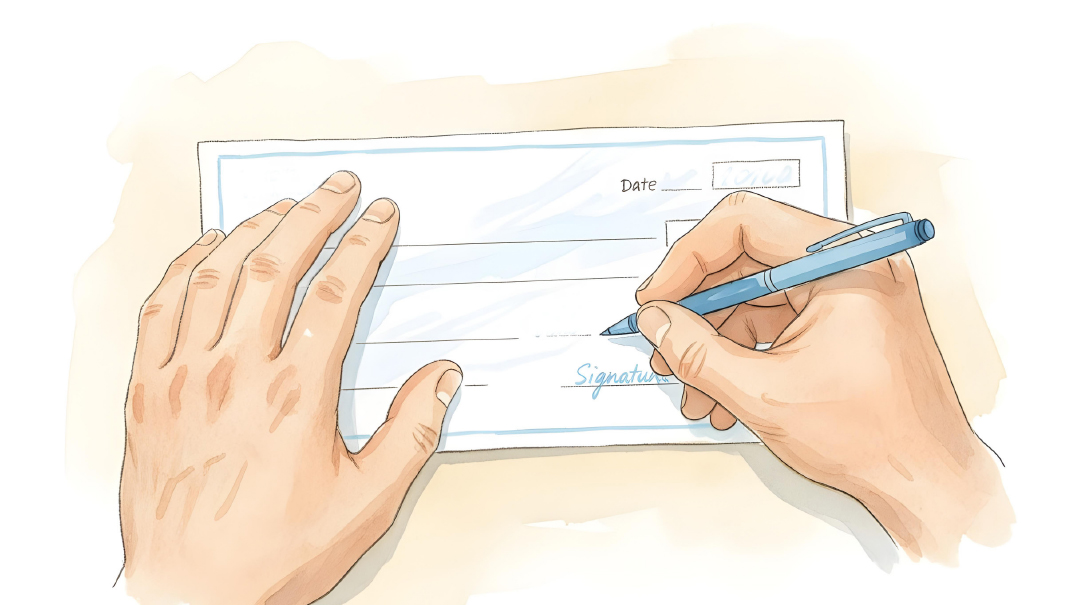
Later that night, as the house quieted down, Shlomo turned to me. “Oh — I forgot to tell you,” he said. “On Friday, I decided to give a bit more tzedakah before the year ended. I wrote five checks — to five local institutions.”
I stared at him, stunned. “You’re serious?”
He nodded.
And that’s when it hit me — the full picture. The same day our house filled with carbon monoxide, Shlomo had given extra tzedakah. That same night, Hashem had quite literally saved our lives.
We sat there, speechless, hearts pounding with the realization.
Tzedakah tatzil mimaves — charity saves from death.
Not just a saying. Not just an idea.
A living truth, whispered through the coldest night in Atlanta.
Glowing from Giving: In Search of Happiness
Rebbetzin Aviva Feiner
T
o give is to live.
Sounds cute?
A study by Norton, Dunn, and Aknin (2008) provided real evidence for this idea. They took two groups of students and asked them to evaluate their happiness baseline on a scale of one to ten. Everyone was then given $5 to $20. Half the group was told they needed to spend it on someone else and the other group could do as they pleased.
What they found once the money was spent was the following: In reevaluating the happiness of everyone in the study, they found that the givers scored much higher than the ones who spent the money on themselves. The actual amount they gave made no difference at all. After all, what could they buy someone for $5? An ice cream? A pretty hair clip? Not much of a grand giving, and yet this act of giving raised the happiness quotient! It also increased their sustained happiness.
Research suggests that altruistic behavior activates regions of the brain associated with pleasure and social connection, creating a “warm glow” effect that contributes to the boost in happiness. The benefits of giving are often greatest when people have a choice in how they give, feel a personal connection to the recipient, and can see the positive impact of their actions
As neshei Yisrael, we are in unique roles as givers. Ma Hu af atah — to be like Hashem is our goal. And all Hashem wants is to give to His creations and even more so to his children — Klal Yisrael.
Rav Dessler famously points out that the word “ahavah” love has the root “hav,” to give. Giving builds love, and love most certainly builds happiness. When we give to one another, we create the best balm for our hearts and give nachas to Hashem. It’s a win-win!
For the Good and the Bad — When in Pain: Guidance from Piaseczna
Rabbi Meir Kahane
I
was approached by someone who had recently recovered from a long and painful illness. She knew she should thank Hashem for her recovery, yet struggled with the fact that Hashem had brought her the illness in the first place. She said it felt like thanking someone who had been beating her for finally stopping. She wanted to understand how to approach this feeling.
The Piaseczner Rebbe in Tzav V’ziruz (os 35, middle of section daled), addresses this, albeit from another angle. His core message is that really, we should thank Hashem for the illness as well, not only the recovery. Although the Rebbe doesn’t reference it, the Gemara (Berachos 54a) says, “Chayav adam l’vareich al hara’ah k’sheim shemevarchim al hatovah — a person is obligated to bless Hashem for the bad just as he blesses Him for the good.”
Of course, nothing Hashem does is bad, everything He does is good (Berachos 60b); the Gemara’s wording is simply being sensitive to the way it feels (see Maharal, Derech Chaim, 3:15). But that’s exactly why we make a brachah and thank Him for it. The illness was good and no less an act of love and chesed than the healing, even if we can’t fathom how.
The Rebbe’s tone is extremely sensitive to the fact that this can be very hard to hear. It’s a difficult avodah and reflects a high level of emunah, one that may take time to cultivate. It’s for this reason that we generally emphasize gratitude for the recovery rather than the illness. It’s simply not fair to expect a person to be immediately capable of thanking Hashem for the pain he went through. It’s for this reason that Chazal instituted a different text for the brachah on tovah than on “ra’ah” since naturally, our feelings of appreciation are far stronger for the salvation than the pain (Berachos 60b and Rashi there, s.v.l’kabulinhu).
Still, both experiences warrant a brachah and both call for gratitude. Our job is to work towards acquiring such clarity.