One More Trip to Kenya
| May 30, 2012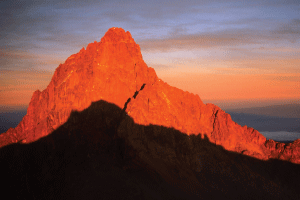 After Mount Kilimanjaro in Tanzania Mount Kenya is the tallest mountain in Africa at 17058 feet (5199 meters). It lies 124 miles (200 kilometers) north of Nairobi and is almost round with three main peaks rising up in the middle: Batian Nelion and Lenana. The peaks were named for ancient Maasai chiefs one of the four tribes that used to live around the mountain. It takes four days for any fit person to reach Lenana Point but only experienced mountaineers can climb the other two peaks.
In 1899 Point Nelion was scaled for the first time in history. Forty-four years later three Italian prisoners of war held by the British climbed to Point Lenana planted the Italian flag to tease their captors and then marched proudly back to prison.
Mount Kenya straddles the equator so you’d expect it to be very hot but in fact it’s so high that it’s topped with 11 glaciers. There used to be more but over the last hundred years many have disappeared completely. Since no new snow falls no new ice can be formed so the rest of the glaciers are shrinking and may disappear within 30 years. The weather on the mountain is summer during the day and winter during the night.
Climbing the mountain you walk through several different zones. The lower slopes of the mountain are farmlands. A little higher and the rainforest begins. Sadly many of the trees have been cut down for firewood. In the forest you must watch out for elephants and buffalo. But don’t worry too much … they usually roam at night when you are sleeping safely in a hut or tent. You’ll also see rock hyrax (a mammal that looks like a guinea pig) antelopes birds and monkeys.
Breaking through the forest you come to an area of bamboo that grows taller than 39 feet (12 meters). Next comes the timberline forest. The trees here are smaller than the trees in the forests lower down the mountain and more intact because this forest is less accessible. At around 9800 feet (3000 meters) the landscape changes to moor land (large wet areas). Many of the plant species here don’t grow anywhere else in the world. Since the temperatures are freezing here at night some plants like the giant rosette use special bud leaves that close around their buds and protect them from freezing. You’ll see hyraxes and groove-toothed rats scuttling around and perhaps even a leopard or two. At night the rats burrow into the thick roots of giant senecios (a type of daisy) to keep warm.
Now all that’s left is to cross a vertical bog and then you’ll break through to the gray rocks of the highest slopes. You’ve made it to Point Lenana!
Oops! We could not locate your form.
