Mold
| December 5, 2012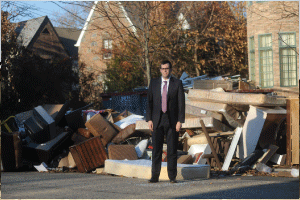 “What large lovely houses ” I think with admiration as the car glides down a wide street in tonyLawrence New York. Set back from the ample lawns are pillared plantation-style mansions mock Tudor domiciles conservative Colonials. The landscaped bushes and trees look a bit threadbare but that’s to be expected on a chilly sunny day in late fall.
They are fabulous houses … but it seems there’s nobody home. Nary a car pulls out of a driveway; nobody emerges to walk a dog. And the curbs of these elegant homes are piled high with trash sometimes veritable mountains of garbage. A few of them have dumpsters parked outside loaded with damaged furniture broken boards and pieces of sheet rock.
Just four weeks ago you wouldn’t have recognized this place as a street at all. When Hurricane Sandy came barreling throughNew York this entire block was submerged under several feet of charging floodwater. The water has receded but the homes inside are destroyed.
“Here it was so flooded that Hatzolah couldn’t even get in” indicates Rabbi Boruch Ber Bender the director of Achiezer a community services organization that unexpectedly found itself at the epicenter of local relief efforts. “The cars were floating. There was a house that caught fire but nobody could get to it. It just burned down.
“Look at that car” he points out. “See how it’s all fogged up on the inside? It was completely waterlogged during the flood and it’s still wet inside.”
Rabbi Bender leads us on a brief tour of some of the Five Towns areas hardest hit bySandy. Tall enterprising and still fresh-faced at 30 Rabbi Bender has always been energetic; yet since the storm he’s turned into a machine in perpetual motion. The four-by-four he’s driving is a rental replacement — his own car was smashed by a volunteer using it for the relief effort.
We swing out ofLawrenceand head toward some more modest homes in Cedarhurst pulling into a development marked by a sign reading “CedarBayPark.”
“This was probably the worst-hit area” Rabbi Bender says. “On the night of the hurricane we were getting calls nonstop from right here. People had been told to evacuate but unfortunately many of them didn’t listen.”
This area is right next to the bay; you can see it from the last streets in the development and the pungent smell of rot and seawater fouls the air. The houses here look forlorn and depressed debris piled up on the curbs. A stubby tree with a trunk at least five feet wide lies up-ended on a lawn its branches scraping the house.
There are trucks in front of several houses bringing in construction materials new boilers insulation. A woman stands outside her house watching unhappily as workers go in and out. “We fixed up the basement and then they found mold. We had to tear it down and redo it ” she says.
One elderly widower here who wasn’t well couldn’t leave his home when it flooded. A group of volunteers waded through waist-deep water littered with floating cars unmoored refrigerators and confused fish to help get him out. “They found him dying ” Rabbi Bender says. “But they were able to save him and he’s alive today. It’s actually amazing there weren’t more tragic stories.”
Another family called Hatzolah in a panic as water rose nine feet high from the basement driving them upstairs and threatening to start electrical fires. “My children are going to drown! My house is floating!” the mother screamed over the phone. When Hatzolah arrived they couldn’t even approach the house—water was already starting to creep into their ambulance. The fire department finally arrived and was able to take over.
“The mother put her kids into a garbage can and climbed out her second-story window swimming toward the firemen and pulling the garbage can along with her” Rabbi Bender says.
To read the rest of this story please buy this issue of Mishpacha. To sign up for a weekly subscription click here.
Oops! We could not locate your form.
