Fully Present

My daughter disassociates when she’s overloaded

Q:
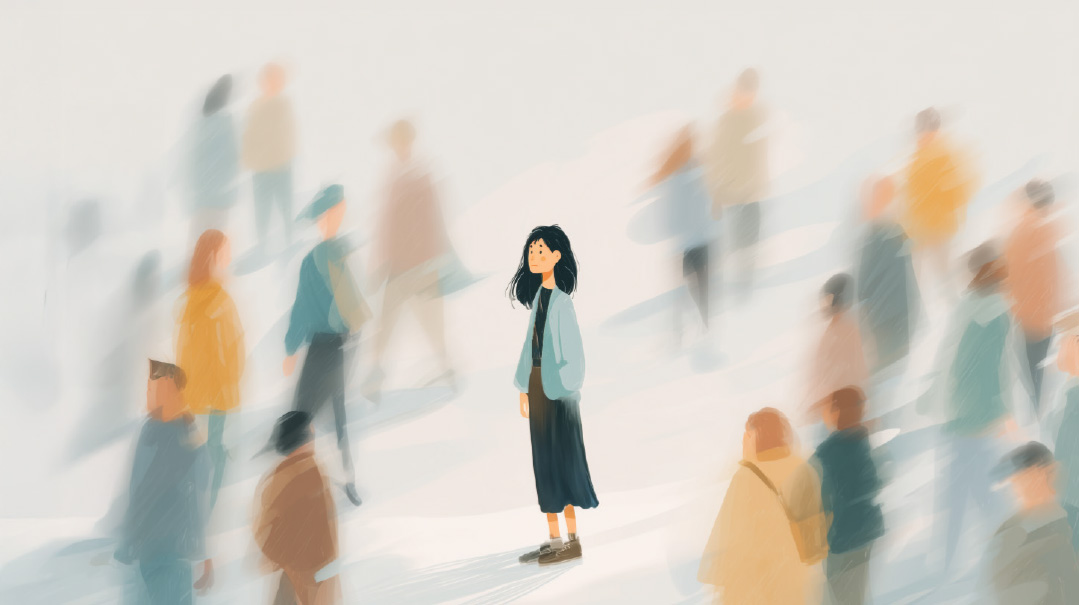
My 18-year-old daughter sometimes experiences dissociation at crowded venues such as shopping malls, auditoriums, wedding halls, and so on. She says it started in tenth grade when she was under pressure from the social scene in high school. It doesn’t happen often, but she’d love to have some methods to enable herself to be fully present at all times.
Stress can definitely cause symptoms of dissociation in some people. It’s the brain’s way of “zoning out,” taking a break from what it perceives to be some sort of overload, a situation that feels too much to handle.
A more intense clinical dissociative disorder can occur in response to traumatic experiences which are, by definition, a form of overload to the nervous system.
Interestingly, the brain is a learning machine, and once it has figured out how to take respite in this form of escape, it will often use the strategy again and again throughout life. However, being a learning machine has its benefits: Just as the brain has learned to dissociate under stress, it can also learn how to use other coping mechanisms for gaining relief and staying present when doing so serves the person better.
Although your daughter’s “shopping mall-dissociation” syndrome has been linked to an earlier social stress, this doesn’t completely explain what it is about malls and other indoor crowd scenes that can trigger this response. Such places can trigger a similar anxiety response in people who’ve never dissociated. Anxiety itself can lead to feeling ungrounded, spacey, “not there” and “out-of-body” as a normal side effect of the release of adrenaline.
Here’s why crowded venues can do this to us:
- Indoor crowded social scenes automatically elicit a nonpathological stress response because they’re noisy (often with music as well as voices and other noise sources), cluttered (with people, objects, structures), bright (fluorescent or strobe lighting), and overstimulating (with movement, sounds, sights, smells). This all creates sensory overload, causing the mind to want to pull back or out of the situation.
- Threat-detection processes (the fight-or-flight response) can kick into overdrive in people prone to anxiety. Indoor crowd scenes filled with people and activity can make this even worse, leading to a quick burnout and subsequent detachment response.
- Physical conditions of malls and other indoor venues don’t provide comfort and grounding cues because of the lack of fresh air, soothing sounds or simple quiet, lack of healing color and lack of appropriate variety in floors/walls and so on. This monotony causes the brain to work harder to gain a foothold, resulting in mild dissociative symptoms in some people.
Now that we understand how the characteristics of these environments affect the human nervous system, we can look at the interventions that address those characteristics. Here are some strategies a person can use to help themselves when feeling uncomfortable in a crowded place:
- Intentionally “ground” yourself before walking into the venue. Take 30 seconds to pause, push your feet firmly down on the ground, take a deep breath and blow out slowly. Take a conscious look around. Notice what is there. Then go inside. Doing this preemptively stabilizes the nervous system.
- Use a grounding tool. Keep something small, solid, and heavy (a weighted fidget toy, a key chain with lots of keys on it, even a smooth stone) in your pocket. When starting to feel lightheaded, foggy, not there, unfocused, or whatever, grab the item and roll it about in your hand, paying attention to its temperature, texture, shape, weight, and other physical features. Doing this gives the brain a focal point and helps energy/attention stay in the body and in the present moment. Drinking a hot or cold beverage has a similar effect on the body.
- Focus attention more closely. To reduce overstimulation, intentionally look only close by — at the person in front of you, at the store or display beside you or right ahead, at a specific sign/door/event right where you are. In other words, reduce visual overload by refraining from taking in the whole scene at once.
- Use noise-reduction earbuds. Similarly, reduce sound overload by using earbuds to dim the auditory stimulation around you (especially useful for weddings!). Research indicates that this strategy alone can reduce dissociation by up to 70 percent!
- Minimize exposure and build up tolerance. While training the body to stay present in these situations, use gradual exposure, meaning, stay in the uncomfortable environment for only a short time while using some of these strategies. Increase the time you spend, adding ten or 15 more minutes each time until you’re able to stay the full time you need/want to stay.
- Cognitive reframing. When you experience dissociative symptoms, acknowledge them for what they are — the nervous system seeking to dampen the effects of environmental overload. It is your brain trying to protect you and it is doing so in a normal, healthy way. Refrain from alarming yourself further by thinking, There’s something wrong with me. Instead, listen to your body’s feedback and consciously participate in helping yourself to feel more settled.
By taking gentle steps to help your brain learn to tolerate temporary episodes of excessive stimulation, you’ll eventually be able to “remain present” in these sorts of environments.
(Originally featured in Family First, Issue 976)
Oops! We could not locate your form.
RELATED CONTENT


My son thinks it’s unfair that I don’t discipline my stepson


My husband is very harsh with my kids. Is it my role to put a stop to it?

I’m scared the tiny number of guests I have at my simchah will reflect badly on me

What can I do to stop my daughter from her obsessive question-asking before she alienates everyone?
