
Filling the Hole
| September 1, 2015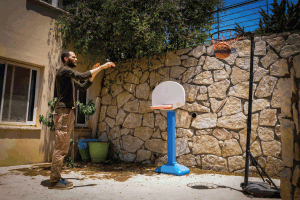 There aren’t too many people who know what global admiration is like who’ve been tracked by tens of thousands of fans who’ve been turned into an icon by the masses who’ve reached the top. But if people thought former basketball king Doron Sheffer had everything he’ll be the first to tell you about the hollowness inside. He had everything but he had nothing. Professionally he reached every athlete’s dream. People still remember him from the 1990s as the 21-year-old Israeli freshman who led the University of Connecticut Huskies to three sparkling seasons before being picked up in the NBA draft — an opportunity he exchanged for a lucrative contract back home with Maccabi Tel Aviv leading it to four consecutive national championships. But only he can testify to the emptiness that accompanied him for many years until he embarked on his spiritual odyssey. Today with a yarmulke on his head and a living room full of seforim Sheffer shoots hoops in his backyard without feeling a shred of longing for a world where his superb athletic talents made him a national hero. “My priorities have changed ” he says as he handles the ball in his sun-drenched garden in Moshav Amirim in the Galil — a village originally established in the 1950s as a retreat for vegetarians and today a place for relaxation and natural healing. “Today I’m a family man and a father of five. Today Torah is the air that I breathe and the food that nourishes my soul.” Doron — thoughtful pensive always a philosopher type even in his secular days — isn’t the kind of person to attack his roots. “I have a lot of gratitude to the basketball world ” he says discussing those gifts that went way beyond the money and the fans. “The game was a school for me and I learned a lot about myself and about life: dealing with crises working as part of a team and learning cooperation diligence determination faith and bitachon. I have nothing against basketball or against people in the industry — they’re good people they’re like my family. But I became repulsed by the exclusive pursuit of victory the envy the competition and the servitude to the results.” He points to the hoop in his yard — just a rim and a net attached to a pole with no backboard but he doesn’t need more than that. “Whenever I want I can take a ball and throw it into the basket and play to my heart’s content. You know today I like the game better than I used to. It’s so much cleaner now with no cameras no fans no scoreboard.
To read the rest of this story please buy this issue of Mishpacha or sign up for a weekly subscription
Oops! We could not locate your form.
