
Swiss Shame
| January 13, 2015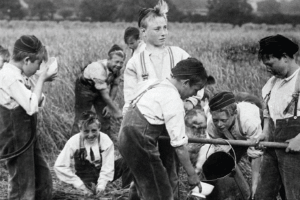 In 1979 Christian was an eight-year-old Swiss boy the son of a poor mother and an emotionally unstable father who disappeared from his life. The mother tried her best to support her two young boys but to the authorities of the remote Swiss district where the struggling family lived her efforts were not enough. One day a social worker showed up and informed Christian’s mother that the children were being taken to live on a distant farm where they would be cared for adequately. The mother had no choice in the matter but even if she’d hoped her sons would be placed with a compassionate foster family those hopes were a far cry from reality — instead her little boys aged seven and eight were to become slave laborers. When the two little boys arrived at the farm they were handed work clothes and sent to the fields. Alone. In the fields as well as in the granaries and the animal paddocks they were required to work until their strength gave out and then some — aside from the mandatory hours they spent in the district public school. If the exhausted children didn’t meet the farmer’s standards they’d go to bed hungry. “We were there for five years and hungry all the time ” Christian told a BBC interviewer investigating the uncomfortable phenomenon of “verdingkinder ” or “contract children.” That’s Christian’s primary memory but withholding meals wasn’t the only punishment. Both brothers were injured in work accidents when they were forced to do jobs that were not age-appropriate. Christian’s story is shocking but certainly not unique. In Switzerland hundreds of thousands of children were victims of state-sponsored forced labor beginning in the 19th century. And although by the 1950s this social welfare policy began falling out of use it wasn’t made illegal until 1981. Christian who is 44 today was one of the last of the Swiss verdingkinder but an estimated 10 000 of them are still alive. And as this dark chapter in Swiss social policy emerges a committee of government advisors sociologists and legal experts has proposed a reparations initiative that would establish a fund of 500 million Swiss francs (about $520 million) to be distributed to the living victims.
To read the rest of this story please buy this issue of Mishpacha or sign up for a weekly subscription
Oops! We could not locate your form.
