
Cities of Refuge
| December 30, 2014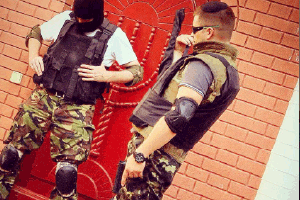 It’s easy to understand whyVladimirPutinhas sent his sights on Mariupol an important port city on the Sea of Azov in southeastern Ukraine and capital city of the Donetsk province. Putin has already effectively conquered Crimea to the south and a takeover of this Russian-speaking city of 500 000 disciplined industrial workers will greatly enhance his bid at becoming ruler of an Eastern European empire he so desires to establish.Although a cease-fire between the Ukrainian government and pro-Russian rebels who are seeking to separate from Ukraine was instituted on September 5 skirmishes and sniper activity continue to plague the city illustrating the fragile nature of the cold truce.In the midst of all this turmoil the Jewish community of Mariupol is struggling to survive. Life isn’t easy for Rabbi MenachemMendelCohen the city’s Chabad shaliach and its official rav. The Russian border is less than 30 miles from his home and the Russian-backed separatist militia has stationed itself just ten miles away. For RabbiCohen the tension-level yardstick is the annual public Chanukah menorah lighting arranged every year with official permits andMayorYuriKhotlubey’s blessing. This year as a security precaution no public lighting took place.A visitor to the city — with its high-rise apartments well-maintained streets and strong work ethic — might be lulled into a false sense of security. But the illusion would soon dissolve upon reaching the city’s outskirts where it looks like every block has sustained damage from Russian bombs. Even City Hall was burned down this past May;MayorKhotlubeyhad to scatter the municipal departments around the city while the town clung to its Ukrainian sovereignty.The ensuing political vacuum created a hotbed of opportunity for lawbreakers. Banks were robbed stores were looted and a general atmosphere of despair overtook the city’s residents who had hoped for a calm summer after the political upheavals of last winter. For the Jews it meant navigating militia checkpoints on the streets leading to the shul and although the regular morning minyan (along with an occasional Minchah and Maariv) continued to take place going to shul meant risking one’s life.
To read the rest of this story please buy this issue of Mishpacha or sign up for a weekly subscription
Oops! We could not locate your form.
