From Killer to Cure
| September 10, 2014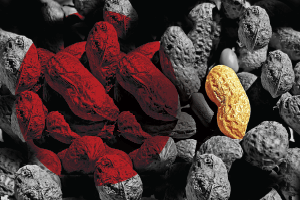 The unpredictability of food allergies particularly with certain allergens such as peanuts can be vexing; even with a history of 30 mild reactions one cannot predict the severity of the 31st. It’s like living next door to a sleeping monster: You know from experience that you’ll probably make it safely past him but there’s always the chance he’ll wake up and pounce with ferocity. Ninety percent of food allergies are caused by the top eight allergenic foods: cow’s milk eggs soy wheat peanuts tree nuts shellfish and fish. While some of these such as eggs and cow’s milk are usually outgrown by adulthood others such as peanuts and shellfish tend to persist. In the allergy clinic ofDr.YitzhakKatz at Assaf Harofeh Medical Center southeast ofTelAviv the air is perceptibly charged. It is the heady thrill that comes with breaking barriers with blazing a trail toward a future that is better and safer for many. It’s here that patients like Avi come to eradicate the danger to their lives. They’re immersed in the fledgling field of oral immunotherapy (OIT) and its potential to revolutionize the allergy world is dramatic. A revolution would certainly be welcome in a discipline that has seen an astounding 50 percent increase in food allergies between 1997 and 2011 with no clear understanding why. An estimated 15 million people in the US have food allergies today including one in 13 children or about two children per classroom. Allergies is an area of medicine that even in 2014 has many questions but frustratingly few answers: There is no treatment other than avoidance; diagnostic blood and skin tests show both false positives and false negatives; there is no way to predict who will outgrow it; and no way to know whose mild allergy will become severe without warning. “Almost all those who come to us have severe allergies with a history of anaphylactic reactions. After a course of treatment 90 percent of our patients can tolerate portion-sized amounts of food they’ve been previously allergic to ”Dr.Katz states. His clinic is the only place in Israel that provides OIT. It is available in the US and Europe although it’s largely considered experimental and almost always done in a hospital setting due to the risk involved.
To read the rest of this story please buy this issue of Mishpacha or sign up for a weekly subscription
Oops! We could not locate your form.
