Your Personal Weapon of Mass Destruction
| October 16, 2013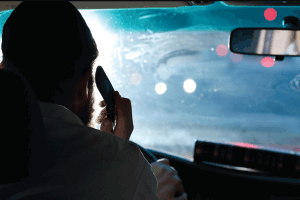 Driving instructor Caren May isn’t a machine gun freak but she does know about the destructive power of automobiles.
That’s why she walks into herBrooklynclassroom each new term with a hunting rifle cradled in her arms. It’s on loan from a friend of hers in the NRA she tells her class of 16- and 18-year-old boys. Oh and it’s loaded.
“As I attempt to pass it around the room most of the students recoil and say ‘No no it’s okay we’ll look at it from here ’ ” says Mrs. May director of Shulamith Driver’s Education inBrooklyn. “No one would think of picking up a loaded Remington and touching it and yet we have fathers who allow their three-year-olds to sit on Daddy’s lap while he’s driving. Like a machine gun a car is a weapon of mass destruction. You must learn how to handle it properly.”
It’s an open secret that poor driving habits abound in frum communities. From Brooklyn toLakewood to Monsey and beyond drivers can be spotted talking on cell phones driving distractedly and speeding. Some drivers don’t bother to use their seat belts while others think nothing of placing small children in the back seat without belting them in. Still others are just too tired distracted or rushed to be driving at all.
While bad habits can be corrected in the meantime poor driving leads to lost lives. While no statistics exist for Jewish drivers alone the overall picture is alarming. According to the US Census Bureau in 2009 nationwide 33 808 people died in traffic accidents 1 156 of them inNew YorkState. Of the totalUSnumber 10 591 people died as a result of speeding and 5 474 were killed due to distracted driving. More than 2 million Americans were injured in crashes in theUnited Statesin 2009 a full 20 percent of them the result of distracted driving.
Rob Lawson police chief in Lakewood New Jersey says the attitude toward driving in his town can be summed up by a popular bumper sticker: “Pray for Me — I Drive in Lakewood.” He’s seen it all from talking on cell phones while driving to speeding to cutting off other drivers. “Speeding combined with distracted driving I would say are the biggest issues ” Lawson says. “It’s not an exaggeration [to say] that every third or fourth car you’ll see the driver on his cell phone.”
To read the rest of this story please buy this issue of Mishpacha or sign up for a weekly subscription.
Oops! We could not locate your form.
