Even Hizbullah Wants This Synagogue
| December 5, 2012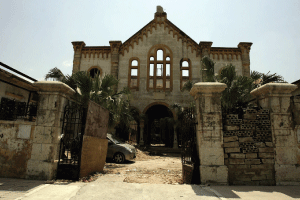 We were waiting for him outside the upscale Tel Aviv accounting office where he would be meeting with wealthy expatriates for his current mission. I agreed to the terms of the interview — no photographs even in profile. It isn’t every day that I have an opportunity to hear firsthand about the conditions under which a handful of remaining Jews are living in the heart ofBeirut Lebanon.
Isaac Arazi the elderly soft-spoken self-declared head ofLebanon’s remaining Jewish community was in Eretz Yisrael in order to raise funds to complete the renovation of the bombed-out Magen Avraham synagogue inBeirut. The renovation project has ironically been partially sponsored by the Lebanese government itself even with the backing ofIsrael’s arch-enemy Hizbullah.
We enter the office suite scanning the faces of the men who are already convened; we wonder which of the three faces belongs to Arazi. But we soon learn that none of them is the man we were scheduled to meet. All three are Jews who formerly lived inLebanonand now reside inIsrael. Isaac Arazi who enteredIsraelon a visa throughCyprus has decided to cancel at the last minute — he’s reluctant to be exposed to unfamiliar eyes. Yet although he declines a direct interview he communicates through an intermediary sharing the surprising story of the Magen Avraham synagogue’s restoration right in the heart ofBeirut’s luxury district.
Face-Lift
Only about 20 Jews remain inBeirut Arazi relayed describing how the former Jewish Quarter is now surrounded by luxury apartment blocks and offices dotting the skyline as the city has become rehabilitated after decades of civil war and Syrian invasion.
“For anyone who doesn’t live in Lebanon just hearing the word Beirutevokes images of a ruined city filled with minefields and explosives and scorched by years of warfare. But that has not been the case for a while now” Arazi conveyed to Mishpacha. “Beirut is one of the most beautiful cities in theMiddle East. Where once there were ruins there are now luxury buildings and modernized towers.”
To read the rest of this story please buy this issue of Mishpacha. To sign up for a weekly subscription click here.
Oops! We could not locate your form.
