Survival of the Frummest
| June 20, 2012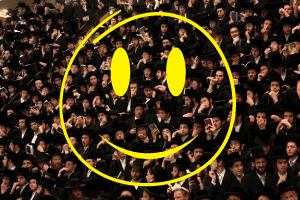 If Mitt Romney a committed Mormon were to base his choice of vice president on the results of a recently released Gallup survey on religion and wellbeing he might well want to consider selecting an observant Jew as his running mate in this November’s election.
The survey by Gallup one of the world’s leading polling organizations contained good news for both America’s Jews and Mormons — and even better news for the most religious members of both groups. In a two-year study process involving hundreds of thousands of interviews Gallup sought to determine among other things how members of different religious communities would score on a series of indexes dealing with issues of physical mental and emotional health and wellbeing.
Based on at least 1000 interviews each day with adults across the United States the Gallup-Healthways Well-Being Index measures the overall wellbeing of the American populace based on six subindexes:
- Life evaluation based on respondents’ self-assessment of whether they are thriving struggling or suffering
- Emotional health measuring levels of anger stress and depression — and by contrast happiness enjoyment and respect
- Physical health measuring frequency of illness energy level and obesity
- Healthy behavior measuring lifestyle habits like smoking healthful eating and exercise
- Work environment measuring job satisfaction ability to use one’s strengths and supervisors’ treatment
- Basic access measuring respondents’ access to life necessities like health care sufficient funds for food and shelter and safety
The survey based on an analysis of the data emerging from 676000 interviews conducted in 2010 and 2011 found that Jews and Mormons have the highest wellbeing of all faith groups and those with no religious identity have the lowest overall wellbeing outcomes. The Gallup survey’s three religion categories were: “very religious ” referring to those for whom religion is an important part of daily life and who attend religious services at least weekly or almost every week; “nonreligious ” describing those for whom religion plays no role in daily life and who almost never attend services; and “moderately religious ” those who fall somewhere in between the first two groupings.
The survey not only confirmed in line with many previous studies that there is a strong positive relationship between religiosity and mental emotional and physical wellbeing but also that this linkage holds true across all faiths. This is not to say that religiosity necessarily insulates one from dysfunction: 15.6 percent of very religious adults have been diagnosed with depression at some point. Yet that group is still 24 percent less likely to receive such a diagnosis than those who are moderately religious.
But the study’s most striking finding is that within this highest-scoring “very religious” category itself Jews describing themselves as very religious outstripped those of all other faith communities. Very religious Jews scored 72.4 percent on the broad Well-Being Index with Mormons as the next highest scoring group at 71.5 percent. In simple terms this means that religiously observant Jews have higher reported levels of happiness satisfaction with life and many other elements of wellbeing than any other group in America.
With regard to the overall religiosity of their members however the Jewish and Mormon communities couldn’t be more different. Mormons are by far the most religiously self-identifying group in the country with 73.4 percent of its members categorized as very religious. Jews are sadly the least religiously identifying of American communities by an even wider margin; 16.9 percent are very religious and a full 53.5 percent call themselves nonreligious. In no other group in the survey did a majority of members declare their lack of religious involvement.
To read the rest of this story please buy this issue of Mishpacha or sign up for a weekly subscription.
Oops! We could not locate your form.
