Sitting Pretty
| May 16, 2012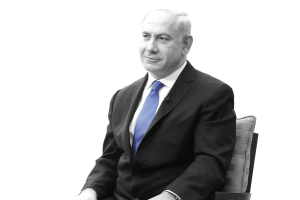 Binyamin Netanyahu might be the master of the middle-of-the-night surprise.
Back in 1996 Israelis fell asleep on election night certain that Shimon Peres had defeated Netanyahu in the prime minister’s race only to awaken to the final vote count that put Netanyahu ahead.
Netanyahu pulled another bolt from the blue last Tuesday in the wee hours of the morning the day after the Knesset voted to dissolve itself and hold a September 4 election. Netanyahu formed a new broad coalition government in partnership with his leading political rival Shaul Mofaz thus postponing the election until its regularly scheduled date of October 2013.
In doing so Netanyahu (Likud) now commands a coalition of 94 out of the Knesset’s 120 members and seven out of its 13 political parties.
Another one of Netanyahu’s rivals who was looking forward to entering the Knesset via elections Yair Lapid had his hopes dashed and suggested: “The last time a state had such a big political coalition was under Nicolae Ceausescu in Romania.”
While it would be an exaggeration — even for the acerbic Lapid — to compare a legal political pact crafted by parliamentary parties to Ceausescu’s brutal dictatorship for Netanyahu co-opting Mofaz and his faction of 28 Kadima MKs was a major political coup.
Born in Iran the same year in which the State of Israel declared its independence Mofaz a former IDF chief of staff is fresh off a political victory of his own having defeated the ultra-ambitious Tzipi Livni the darling of the international political left in Kadima’s recent primary.
Kadima was formed — some say born in sin — by Ariel Sharon in 2005 by more than two dozen Likud defectors who made a sharp ideological turn from right to left in the heat of controversy over the Gaza disengagement that resulted in the expulsion of more than 8000 Jews from their homes and the drying of the desert they made bloom.
Some analysts say the new coalition reflects Netanyahu’s own tilt to the left while others contend Kadima members have merely returned to their natural perch.
This all remains to be seen. Either way in a country where parliamentary instability is the norm the assembling of such a broad coalition is unprecedented.
“This is the coalescing of the new establishment against the outsiders” says Professor Hillel Frisch a senior research associate at Bar-Ilan University. “This whole move reflects a completely different Israel and I think it’s the swan song of the Israeli left.”
While in one respect the decision-making process becomes simpler when virtually every one of Israel’s fractious political parties belong to the ruling coalition it may also become much more difficult to reconcile the conflicting views of a wide range of parties ranging from center-left to chareidi and everything in between.
Who stands to gain and who stands to feel the most pain from Israel’s new political constellation? And how is Israel’s move likely to be perceived by its allies and enemies abroad?
To read the rest of this story please buy this issue of Mishpacha or sign up for a weekly subscription.
Oops! We could not locate your form.
