Tracks of Fate
| January 4, 2012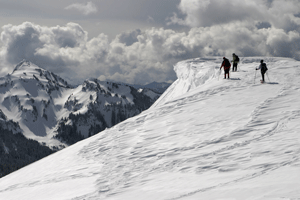 On Sunday December 11 Dr. Grobois set out for an expedition he’d wanted to do for years. He was in Seattle for a relative’s bar mitzvah and took the opportunity to hit Mount Rainier (about 60 miles southeast of Seattle) for a snowshoe excursion at a breathtaking spot called Paradise about 4 500 feet up the mountain.
Paradise Mount Rainier’s national park is famous for its glorious views and wildflower meadows in summer and its snowshoeing cross-country skiing and tubing in winter when it gets over 600 inches (50 feet) of snow. Hikers can choose from many paths that take them past rundown sheds virgin forests waterfalls beaver dams mountain goat ridges and the silence of the snow. But on a windy cloudy day when all the snowy surfaces looked equally confusing something went wrong for the hiking enthusiast. By nightfall long after the national park closed his rented car was still in Paradise’s parking lot. When he missed his flight back to New York his wife Susan called the Seattle relatives — and the park authorities. On Monday morning a helicopter rescue crew set out to look for Dr. Grobois only to spot his lifeless snow-dusted body late that afternoon lying face-down in the snow at the top of a drainage known as Stevens Creek canyon. Because of poor weather conditions and dangerous terrain the rescue team waited until Tuesday morning to retrieve the body.
Shock and grief spread quickly across the Jewish community of New Rochelle. Dr. Grobois a prominent addictions psychiatrist and lecturer at the Montefiore Medical Center had been deputy chief psychiatrist for the Jewish Board of Family and Children’s Services in New York before opening a private practice in Manhattan. Rabbi Reuven Fink of the Young Israel of New Rochelle described him as a “very very warm and very loving person” who was generous outgoing had a love of life. He was an expert in tai chi and stayed in shape by doing weekly hikes. Tragically this was his last.
Ranger Uwe Nehring spent Monday and Tuesday on the search for Dr. Grobois directing the ground team that pulled him out of the creek bed and prepared the body to be flown out to Madigan Army Medical Center. He has been on the front line of many rescue operations and has seen many tragedies in his more than three decades with the service. Dr. Grobois’s death is the third under his purview this year alone. Earlier this year Nehring and his crew retrieved a drowned 11-year-old boy in the nearby White River. The boy was camping with family when he tried traversing the river with his uncle each holding onto opposite ends of a walking stick. When the boy suddenly lost his footing his uncle grabbed him by the sweatshirt. Although they were both swept downstream and pulled under logs he was able to hold onto the boy for a quarter of a mile before he lost his grip. In the same area this last summer a two-year-old lost her life when she wandered away from her parents and within seconds was swept down the river in front of the eyes of her horror-stricken family.
“These tragedies unfortunately go with the turf” Ranger Nehring told Mishpacha. Between the Coast Guard from which he retired this summer after 34 years and the National Park Service he’s had more than three decades of search-and-rescue experience on all seven continents a career he calls “one wild ride.”
To read the rest of this story please buy this issue of Mishpacha. To sign up for a weekly subscription click here.
Oops! We could not locate your form.
