Let’s Visit an Oil Rig
| December 21, 2011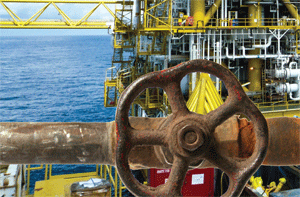 What Is an Oil Rig?
An oil rig is a structure where crude oil is taken from deep underneath the ground. Crude oil is oil that is natural and unprocessed. It looks black. This liquid also contains some natural gas water and sediment (bits of rock).
After the liquid is collected it is sent in an oil tanker ship to a factory called a refinery where it is cleaned. The oil is then used as gasoline and for manufacturing thousands of items such as petroleum jelly (that’s Vaseline to us) ballpoint pens stockings fishing rods insect repellent and even aspirin.
Around the world in places such as the United States Canada China Norway Venezuela and many Arab countries oil rigs are busy working round the clock bringing 80 million barrels of crude oil up to the surface each day. Since crude oil is found not made in a factory scientists and workers are constantly busy searching for it. Sometimes it can be spotted easily if it seeps meaning rises up to the surface on its own for example in the “tar seeps” of central California. But most of the time people have to drill to find it either by using a drilling facility called an oil rig that is placed on the land or out in the middle of the sea.
Most oil rigs are onshore meaning on land because it is much cheaper and less complicated to drill there. Building a new oil rig on land “only” costs about $10 million. Rigs for the water called offshore rigs are built on land and then towed there on a massive barge a boat with a flat bottom that is used to transport goods. Setting up a rig for shallow water can cost between $75 million and $175 million and up to $400 million if it is meant to stand in deep water!
Today we’re headed to an offshore rig.
To read the rest of this story please buy this issue of Mishpacha or sign up for a weekly subscription.
Oops! We could not locate your form.
