
The Smile That Changed Lives

From Yerushalayim to Gateshead, Rav Moshe Chaim Dunner ztz”l was a beacon of avodas Hashem and middos who uplifted all who came into contact with him
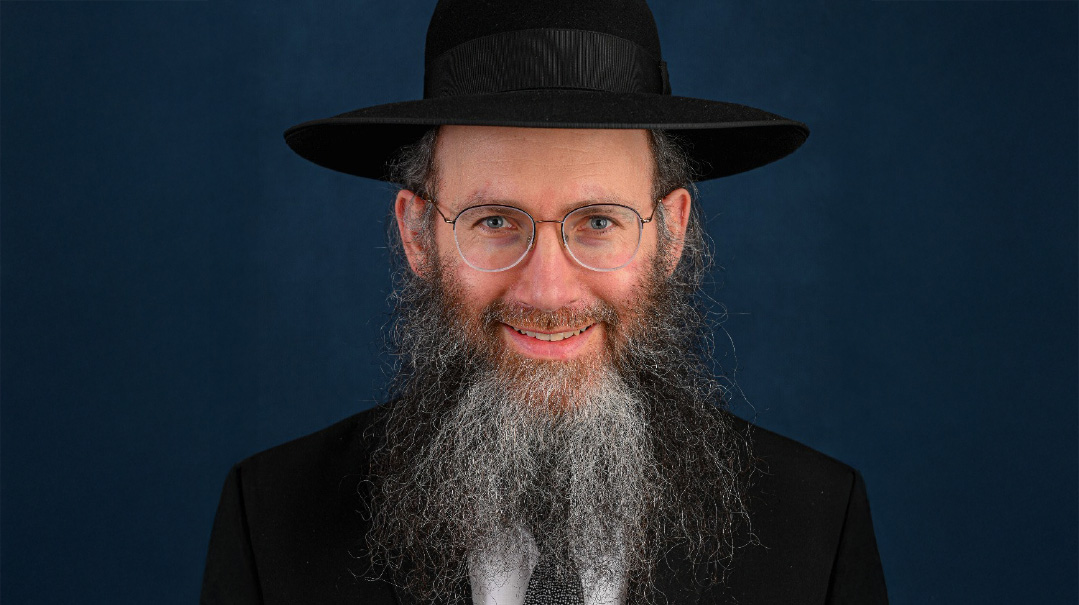

By Rabbi Aron Iwanier
The tragic passing of my dear friend Rav Moshe Chaim Dunner ztz”l at age 46 has left a gaping void in the hearts of thousands across the world. As the beloved mashgiach of Yeshivas Tiferes Yaacov in Gateshead, he was a beacon of strength, love, and wisdom to all who knew him.
Reb Moishe Chaim, as he was so fondly known, was a pillar of support and inspiration to hundreds of talmidim. (His father, Rav Shlomo Dunner, died as a young man; his grandfather, Rav Yosef Tzvi Dunner, was the head of the Union of Orthodox Hebrew Congregations in London.) From his formative years in Gateshead yeshivah and the Mir in Yerushalayim to his transformative role back in Gateshead, his warm smile and heartfelt words broke down the most impenetrable of barriers. His advice was sought not only by talmidim but also by alumni and parents alike, seeking direction and clarity.
The outpouring of grief and love following his passing was a true testament to his profound impact and the way that he deeply touched the lives of those around him.
Fountain of Faith
The golden thread that ran through every aspect of his life was his unwavering emunah. This wasn’t just for himself — it was a fountain from which he drew strength to uplift others. His radiant expression gave others hope, even in the most trying times. This empowered his talmidim, helping them uncover hidden strength and confidence, and inspired each to strive to attain their unique mission in this world.
One of Reb Moishe Chaim’s most defining traits was his menuchas hanefesh — his inner calm and clarity of mind. Every decision he made was marked by a deep sense of yishuv hadaas, delivered with quiet serenity. This composure made him not only a powerful listener but also an anchor of support for anyone who turned to him for guidance. He gave his full attention to each person, making him feel seen, heard, and valued.
Reb Moishe Chaim had a unique ability to deliver tochachah — rebuke — with love and positivity. His guidance was never sharp or hurtful. Once, seeing a bochur in a supermarket holding an inappropriate magazine, he didn’t scold him. Instead, he gently replaced it with a case of beer and said with a smile, “This would be more appropriate.” His message landed not through rebuke, but through connection and kindness.
The word “bad” never entered his lexicon; it was always “good,” “better,” or “even better.”
His sever panim yafos was legendary, but it was his ayin tovah — his ability to see the good in everyone — that impacted his talmidim and made him a true mechanech. He saw potential where others saw struggle.
He would ask a talmid, “What percentage of your tafkid do you think you’re fulfilling?”
If the talmid answered “sixty or seventy percent,” Reb Moishe Chaim would beam and say, “You’re actually at ninety-five percent — you’re nearly there! Don’t stop!”
His natural understanding of people led him to help many talmidim uncover their own positive maalos and build confidence in their own abilities, helping them attain their potential.
His smile wasn’t just warm — it was transformative. Many shared stories during the shivah of how his presence changed their lives. Even those far from a Torah lifestyle were drawn in by his sincerity.
One such story stands out: After Reb Moishe Chaim had paid many visits to Hadassah Hospital in Yerushalayim, a nonreligious security guard, moved by his positivity and warmth, formed a bond with him. Reb Moishe Chaim later bought him tefillin, and the bond between their families still endures.
From his youth until his final days, Reb Moishe Chaim was a giver. Whether sharing treats with nieces and nephews, supporting those around him who were down, or encouraging someone who had sought him out, Reb Moishe Chaim gave generously — with heart and soul.
Always Striving Higher
Friends can testify to his nonstop avodas hakodesh. As a yungerman, he went out of his way to preserve his kedushas hare’iah, avoiding the crowded streets of Yerushalayim by using side streets. When there was no other option, he would take a taxi — even though he was under financial strain. He would always insist that this what Hashem wanted of him.
He was always shteiging, never falling into the inertia of “normal life”; there was always a middah or chizuk he would be working on. He would adjust his sidrei limud to avoid falling into rote learning, even on occasion getting up for haneitz to create a “new” time to learn. He was always seeking new heights in avodah and Torah.
The deep spiritual levels he attained in his avodah of shivisi Hashem became most evident during his final illness. Despite his pain and suffering, he never lost his composure or his trademark smile. Whether he was on the operating table or in a hospital bed, unable to speak — when asked how he was, he would smile and point upward, signaling, “Hashem runs the world — everything is good.”
His calm acceptance so impressed the chief oncologist at Columbia Hospital, someone who constantly deals with mortally ill patients, that he sent a letter to the family expressing his astonishment at Reb Moishe Chaim’s unusual serenity in the face of crippling adversity.
During the last weeks when he could no longer speak, the family member on rotation to stay with him knew that when he woke up, he would point to the clock and his tefillin. The uppermost thing on his mind in that difficult time was not missing davening.
Because that emunah was his anchor — a fact that shone bright, even during his illness, when pain and discomfort might have shaken anyone’s spirit. Despite the physical suffering, he maintained the same calm, composed presence he’d always shown. It was clear to all that his tranquility wasn’t circumstantial — it was deeply rooted in the connection to Hashem that was his lifelong source of strength.
That Inner Light
By Gedalia Guttentag
Eidel is one of those Yiddish words that defies translation, because it contains such layers of meaning. It bespeaks a uniquely Jewish mix of refinement, humility, pleasantness, and greatness of soul. In an era that prizes the brash and brazen, the world of the beis medrash treasures the eidel.
That’s the word that comes to mind when I think of Rav Moshe Chaim Dunner ztz”l, whose eidelkeit was etched into every line of his being.
Since I never knew him when he was mashgiach of a leading yeshivah, to me he remained Reb Moishe Chaim, the avreich in Mir with the glowing smile, and all the time in the world for a bochur who needed a boost.
Reb Moishe Chaim possessed the rare ability to be lofty and down to earth at the same time. It was obvious that he worked on himself intensely, and aimed high in his personal avodas Hashem. It was equally obvious that he was the nicest, most sympathetic person on earth to schmooze with. Instinctively, you knew that you could unburden yourself to him, that you were safe from judgment.
Wearing that gentle smile, he would pat the bench next to him, and talk to you as a friend. He would muse his way through different options and gently nudge you in the right direction — onward, and upward.
After you sat and talked to him, life was more focused, the Gemara more appealing, the road ahead clearer. He was an elevated person, and spread that elevation wherever he went.
The reason he opened his heart was that he genuinely cared about other people. I didn’t realize how much until one day when I emerged from my dirah, still run down after a few sick days. Sensing that I needed more than a few words of encouragement, he led me over to an eatery near the yeshivah, and bought for me the first square meal that I’d had in days.
Clearly, he was far from a wealthy man, yet he was someone who pulled out all the stops because he cared so much.
Even though I lost touch with him as he became a byword for chinuch in Gateshead, I know what made Reb Moishe Chaim so beloved in that role. Because the light within that attracted bochurim is what drew me in when he was still an avreich.
He was a born mechanech — the type who every single bochur deserves, but often doesn’t get. I was fortunate enough to encounter a walking advertisement for kavod haTorah — someone who was the epitome of the Gemara in Yoma (86a): “See how beautiful are his ways, how correct are his actions.”
(Originally featured in Mishpacha, Issue 1073)
Oops! We could not locate your form.
RELATED CONTENT


As we mark the shloshim of Rabbi Moshe Hauer ztz"l, Mishpacha contributors share more memories


Six mornings a week for 1000 cycles, TorahWay has brought light and lomdus to London’s workday


