
From the Mountain to the People

Rav Uri Deutsch shares Shavuos insight and inspiration

Illustration: Ayala Shooter
Photos: Agudath Israel of America Archives, Flash90
Shavuos commemorates the moment when we stood before a humble mountain, watching as all of creation stood still and the roar of the Devar Hashem reverberated from a Heavenly sphere now open wide. It was the day that changed the course of history; ever since that encounter we would be a People guided by a divinely outlined mission.
The force of Matan Torah continues to this day — transmitted through a kol gadol v’lo yasaf — but the clarity has been obfuscated. Questions swirl and challenges abound, but a People who cling to Truth continue to seek truth.
Hashem, in His infinite kindness, has entrusted the many kehillos of Klal Yisrael with rabbanim to guide us, to hear our doubts and provide clear direction. Today, Rav Uri Deutsch shlita serves as the much beloved mara d’asra of Lakewood’s Forest Park community, and he has graciously consented to devote some of his precious time to share these insights with our readership.
On this zeman Matan Toraseinu, these divrei chizuk and hadrachah make our kabbalas haTorah that much more personal, tangible, and enduring.

We asked:
The Shelah Hakadosh cites the teaching of the Tola’as Yaakov that Shavuos is the “Yom Hadin” for Torah. The idea of a “Yom Hadin” brings to mind a day filled with fear, awe, and intensity. Yet Shavuos is celebrated as a day of joy, very different from the tenor of Rosh Hashanah. How can this be reconciled with words of the Shelah?
This question is predicated on the assumption that a Yom Hadin must inspire some element of fear, of eimas hadin.
But the truth is that a day of judgment doesn’t necessarily translate into a day of trepidation and fear. The Vilna Gaon writes in Biur HaGra that the reason why we don’t say Tachanun on Tu B’Shevat is because it is Rosh Hashanah L’ilanos (a new year for the trees). He explains that every Rosh Hashanah is a day of simchah, and therefore there is no Tachanun.
Rosh Hashanah itself does inspire fear in us, because as the gemara in Eiruchin tells us, “sifrei chaim v’sifrei meisim pesuchim l’fanav — the books of life and the books of death are opened before Him.” But the isolated quality of a Yom Hadin in and of itself, does not warrant the fear we associate with Rosh Hashanah.
In fact, Pesach is also a Yom Hadin — it is then that we are nidon al hatevuah, we are judged on the grain, and Shavuos is when we are nidon al peiros ha’ilan, judged on the fruit of the tree. And they are both joyous Yamim Tovim, days of simchah and not fear.
As cited in the question, the Shelah teaches us that the judgment of Shavuos is not only on actual fruit, but also alludes to a more transcendent form of peiros — Torah and mitzvos. The term “peiros ha’ilan,” therefore, refers to spiritual fruits in addition to physical ones.
This is in line with an idea taught by the Maharal in Gevuras Hashem that all phases in the agricultural cycle are indicators of something transpiring in the Upper Worlds. Therefore, whenever the Torah describes a Yom Tov in agricultural terms, in addition to the scientific reality, it is also hinting to spiritual potential unique to that time period.
The pasuk refers to man as a “tree” — “ki ha’adam eitz hasadeh.” On Shavuos, when the “fruits of the tree” are judged, this includes all of man’s spiritual accomplishments. In this light, rather than perceiving Shavuos as a day of fear, it should be seen as a day of opportunity, a day to connect and to bond oneself with all the ideals that the Torah sets out for us. That is what Yom Hadin means in this context. The more one strives to internalize, and sublimate, the message and ideals of Torah, the more he will merit the siyata d’Shmaya to realize his innate spiritual potential.
It’s important to for us to take note that whereas the minhag in Klal Yisrael is to signify the centrality of Shavuos as the Yom Shenitna Bo Torah primarily through limud haTorah, there is a more generally applicable component as well. Anashim, nashim, v’taf were present at Har Sinai, even though limud haTorah is primarily the mitzvah of anashim.
This is because Matan Torah was the experience of bonding with the Torah, fusing it as one with our nefesh, and this is equally relevant to all of Klal Yisrael.
The pasuk describes the shofar blast at Har Sinai as a “kol gadol v’lo yasaf — a great sound that never ends.” The Chassid Yaavetz writes that anytime someone engages in any level of investment in Torah learning, the level of understanding gained at that moment is akin to nevuah. Comprehending Torah is to access something beyond our natural world.
Consequently, relating to Shavuos as a Yom Hadin means to incorporate this capability, to ensure that our actions and mindsets are molded according to the ideals of the Torah.

From Parent to Child
“We should be imbuing in our children that a Yid means a being who is qualitatively distinguished from any other human conception of what a person is”
We asked:
Most of us are familiar with Rav Moshe Feinstein’s famous observation that the reason many children did not remain shomrei Shabbos in the early 1900s is because their parents would come home and say, “Oy, siz shver tzu zein a Yid — how difficult it is to be a Jew.” But while back then it really was challenging to be a frum Jew in America, today, it isn’t hard at all. Religious liberties make it easier than ever before.
What would Rav Moshe’s message be for us today? Is there a modern-day equivalent of “Oy, siz shver tzu zein a Yid” that we should be avoiding?
I
t’s true that in His great chesed, the Ribbono shel Olam has provided us today with conditions in which indeed we do not have that overwhelming sense of “siz shver tzu zein a Yid.” But it isn’t enough that our children don’t hear us complaining that it’s hard to keep the mitzvos. The point that we should be communicating more intensely to our children is the concept of “Asher bachar banu mikol ha’amim” — our chosenness.
There are many members of the Umos Ha’olam who are cultured and refined and deeply committed to philanthropic work or other altruistic pursuits. Should your children point to these people and ask you to explain the difference between you and them? What will you tell them?
The answer cannot merely be, “We have a set of dos and don’ts that wasn’t given to them.” That answer doesn’t begin to scratch the surface of what being a Yid means.
The essential definition of “being a Yid” as the Ramban brings in the name of the Ibn Ezra, is “l’davkah bo — to connect with Him.” The Ramban refers to this ideal as the “sof,” the end. Leading a life of dveikus is the ultimate, the culmination, the apex of fulfilling our existential purpose.
While there is some discussion in the Rambam as to whether or not Chasidei Umos Ha’olam can merit some level of Olam Haba, down here, in Olam Hazeh, the ability to be davuk to Hashem, to bond with Him, is specific to Klal Yisrael.
So often, we give our children a sense that Yidden are Yidden because we have a different lifestyle, we have a different set of rules with which we live. But that description misses the essence of our unique mission. Yidden are Yidden because we have the capacity to become completely bound to the Ribbono shel Olam; we can become imbued, rarified, and sanctified by that connection with the Borei Olam. As long as we leave it to just a list of restrictions, perhaps we have, in some way, perpetuated the mantra, “Oy, siz shver tzu zein a yid.”
In the lashon of the Zohar Hakadosh, the 613 mitzvos are called “taryag ittin — six hundred and thirteen eitzos.” The Zohar is describing the mitzvos as 613 paths, or even suggestions, through which we can achieve the ideal of dveikus.
The most intimate level of connection can be achieved through Torah, but there are other paths as well. The gemara in Kesubos discusses being “davuk” to talmidei chachamim as a way of connecting to the Ribbono shel Olam. For nashim, who are not obligated to learn Torah, the exercise of helping, guiding, nurturing, and raising talmidei chachamim, those who will be intimately bonded with Torah, is a means with which to be davuk in the Ribbono shel Olam.
This message that we should be imbuing in our children is that being a Yid means to become a being who is qualitatively distinguished from any other human conception of what a person is.

We asked:
The sweetness of Torah is not something that is readily apparent. It takes years of dedicated effort to glimpse the Torah’s eternal beauty, while the outside world offers an array of experiences that seemingly offer instant satisfaction. With all that we’re up against, how do we get to first base? How do we convince our children that Torah is an endeavor worth pursuing?
IN
his introduction to his sefer Roshei She’arim (the volume on Kiddushin and Bava Kamma), the rosh yeshivah of Gateshead, Rav Leib Gurwicz, explains that the shift in the learning methodology used in yeshivos, primarily influenced by the derech halimud introduced by Rav Chaim Brisker, was a response to the challenges of the time.
Historically, the prevailing approach was only to plunge into the depths of a sugya once one had become fluent in the entire masechta. But Reb Chaim’s mehalech allowed for a system where, almost immediately, one can become deeply involved and intellectually stimulated by the nuances and intricacies of whatever sugya he is learning.
The same idea is shared by Rav Leib Malin, in his famous introduction to the Sefer Hatvuna, where he writes, in the most lyrical terms, how grateful we must be to the Ribbono shel Olam for allowing the derech halimud of Rav Chaim Brisker to penetrate the yeshivos. It pathed the path for a new generation of bnei Torah to become connected to learning to the point where they, too, can create their own chiddushim, an achievement once accessible only to the greatest talmidei chachamim.
This isn’t the only time this has happened. Centuries before, Rav Yaakov Pollak introduced the method of pilpul. And while other gedolim may have disputed its effectiveness and accuracy, many acknowledged that it was necessary in order to make the experience of limud haTorah enjoyable and to give talmidim a cheishek in learning.
It’s the responsibility of all those fortunate enough to carry the title of “melamed Torah l’amo Yisrael” — an appellation ascribed to the Ribbono shel Olam himself — to teach Torah in a way that makes it accessible, joyful, and meaningful to talmidim.
While younger talmidim may not yet have the depth to truly appreciate the joy Torah brings, often what connects them most to the sweetness of Torah is to see their rebbeim enraptured by the sheer joy of connection to Torah. A generation ago, young talmidim in various yeshivos would come to Lakewood just to observe Rav Aharon Kotler delivering his shiur. They would walk away saying, “I understood nothing but I felt deeply connected to Rav Aharon’s joy and fire.”
A discussion on tasting the sweetness of Torah must include the more painful subject of talmidim to whom the Ribbono shel Olam has given intellectual capabilities that need developing.
We need to be creative and innovative to find ways to connect with talmidim who haven’t yet tasted the intellectual joy of Torah. We must create an approach that allows them to experience the dynamism of Torah, the process of Torah, and the love of Torah, until their intellectual capabilities catch up and they can enjoy the content of the divrei Torah itself. There are a number of ways to do that, and there are many rebbeim and mosdos that have mastered such methodology.
When it comes to competing with outside influences, we need to remember the words of the Mesillas Yesharim who writes, in one of his most famous lines, “ha’adam lo nivra ela l’hisaneg al Hashem — the sole purpose of the creation of man is so that he could take pleasure with Hashem.”
One of my rebbeim once said that the way to read that line is, “Ha’adam lo nivra elah l’hisaneg — the sole purpose of the creation of man is so that he could take pleasure.” You then place a period there. The purpose of life is to have pleasure. But, qualifies the Mesillas Yesharim, the way to do that is al Hashem, by basking in the radiance of Hashem.
A person has a natural desire to pursue pleasure, and the proper way to direct that desire is through connecting with ruchniyus.
But we cannot steer one away from all of the pleasures presented by materialism until we have replaced those pleasures with true l’hisanag al Hashem. We can’t expect our young talmidim to disconnect themselves with all that Olam Hazeh has to offer unless we can show them what Torah has to offer.
That doesn’t mean that our message should be, “If the outside offers you this, then Torah offers you more.” Torah has its own unique pleasure; we don’t have to compete, we have to replace. And b’ezras Hashem, that is what we strive to do.

The Yeshivah Years
“One who achieves a mastery in Torah merely through talent — without work, without striving, and without a process of personal growth — is not a chacham; he is just a repository of chochmah”
We asked:
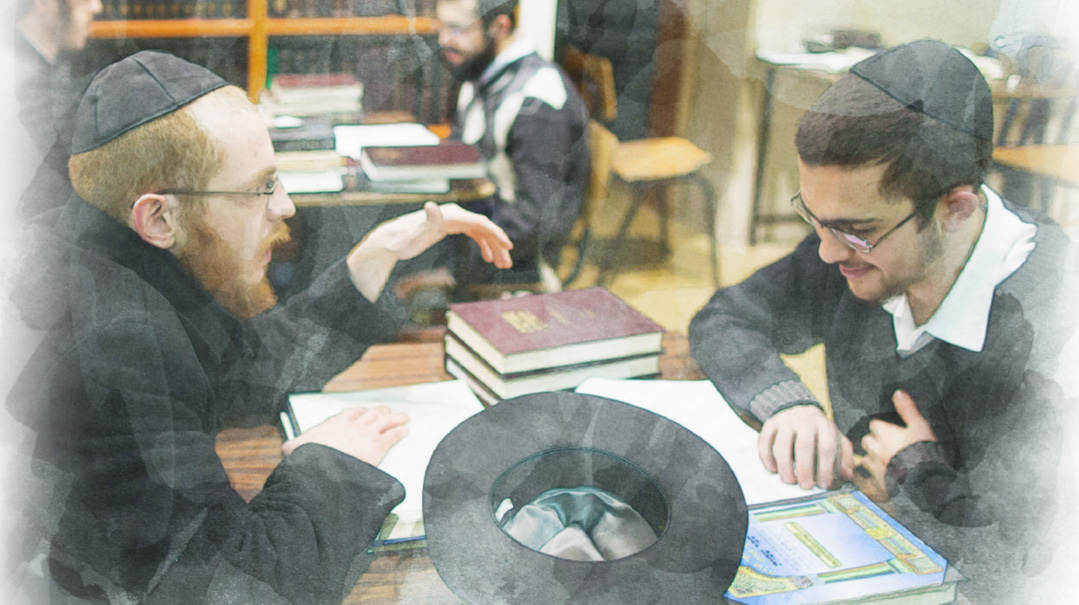
Once a boy enters yeshivah, he finds himself in an environment that places excellence in Torah as its highest value. Often this social dynamic can prompt a boy to invest significant energy into his learning. Is this healthy? Isn’t there a risk that a boy will overwork himself simply to outshine his peers and ultimately crash?
How should this be dealt with from a chinuch perspective, and what are warning signs that parents and rebbeim should be looking out for?
C
hazal teach us that one should learn Torah shelo lishmah, (i.e., not solely for the sake of Torah itself), for mitoch shelo lishmah ba lishmah — through learning for ulterior motives one reaches the ultimate level of learning entirely lishmah.
In describing this idea, Chazal use the example of “al m’nas sheyikra’uni rebbi — [I am learning] so that people should call me ‘rebbi.’” We see that Chazal see this as an acceptable motive to inspire one’s learning.
The Nefesh Hachaim takes this a step further. He explains that this isn’t a reluctant concession by Chazal, rather, this is the ideal — and the only — way to reach the final objective, which is learning Torah lishmah. He calls this process a sulam — a ladder which must be climbed in order to reach the final destination. Learning to achieve recognition and a sense of pride is perfectly in line with the track one must take in order to grow in Torah.
However, there can be an unhealthy variation of this where the yeshivah environment fosters competitiveness. Competitiveness means valuing the person based on his limud, rather than appreciating the levels of spirituality that the person attained. As soon as we allow an atmosphere of competition we are, in effect, creating a rating system that can be debilitating. In such a setting, the external measurement of a talmid’s accomplishments can become very, very negative.
The gemara in Maseches Yevamos says that the punishment dealt to the talmidei Rabi Akiva was because “shelo nahagu kavod zeh lazeh — for they did not show respect one to another.”
The Maharsha there comments that this is not referring to the standard level of respect basic to human interaction. “Kavod” in this context means “kavod haTorah” — they did not recognize the proper level of honor each one deserved because of his spiritual stature.
Meaning, the kavod due to a talmid chacham does not stem from his impressive list of achievements. Rather, it is rooted in a recognition of the talmid chacham’s transformation through his immersion in kedushas haTorah.
In the words of Rabbeinu Yonah on Avos, one who achieves a mastery in Torah merely through talent — without work, without striving, and without a process of personal growth — is not a chacham; he is just a repository of chochmah.
So yes, we do strive in the olam hayeshivos to encourage excellence even on a shelo lishmah level. But this desire for excellence is only something that each individual should be striving for, and shouldn’t constitute an external system that the yeshivah uses to foster comparison and competition.
As far as the concern that a bochur can eventually cave under the intensity of learning, this can happen. It’s always a very subtle balance to engender an atmosphere of growth without crossing the line into competition.
The main indicator to look out for is how much anxiety the bochur has from his learning. If his diligence comes from a choice that he made to grow in Torah — and his social setting is simply a motivation to catapult himself further — then this should not lead to anxiety. If a bochur is overly anxious then that is a signal that the learning has crossed from being a healthy goal into the rubric he is using to define his own self-worth.
Rabbeinu Yonah (also in Avos) writes that while effort in physical pursuits causes exhaustion, efforts in spiritual pursuits bring joy. If we are seeing that the learning is bringing anxiety over joy, that’s a sign that something isn’t right and a correction is in place.

We asked:
Traditionally, lessons about kedushah and shemiras einayim were kept out of the yeshivah curriculum. Should this tradition be followed today? Have we reached a point where the nisyonos are too great to ignore?
MY
understanding based on the letters of the Steipler in Kraina d’Igarta is that there are two reasons why yeshivos do not provide a broader focus on inyanei kedushah. First of all, there is a concept of “ein dorshin b’arayos elah b’shloshah,” an idea found in the mishnah in Maseches Chagigah, which is essentially telling us that kedushah-related issues should be discussed only in private settings.
The second reason is that overfocusing on this topic, even with the intention of overcoming potential pitfalls, can actually lead one to succumb rather than grow. In light of this concern, the hadrachah we’ve received from our gedolim has always been to focus on the future rather than the past; on the “asei tov” rather than the “sur meira.”
The challenges we face today are significant, but I believe that the conversation is, primarily, one that should take place between parents and children, as opposed to in the yeshivah setting. This is really a question for gedolei Yisrael but that is my belief.
Still, yeshivos have a vital role to play in helping talmidim with this nisayon. Even if the topic isn’t actually discussed, talmidim should need to know that their rebbeim are available to discuss the subject should the need arise. Talmidim should be confident that they can approach their rebbeim, and they won’t shy away from the subject and will give open and honest answers, and that they will be there to help them as needed.
Talmidim need to know that their rebbeim are aware of the struggles, are up to date with challenges, and are ready to serve as a resource for help, or, alternatively, to refer them to other resources.
No talmid should feel that the subject is taboo, or not part of the avodah of a ben Torah.

True Growth in Kollel
“The ‘kollel lifestyle’ really refers to a time to be engaged in the highest form of dveikus, a time to orient oneself toward deep personal transformation”
We asked:
Moving along, the years in kollel afford a magnificent opportunity to grow in learning and truly become a talmid chacham. The yetzer hara is aware of this and brandishes some of his most lethal weapons to make sure it doesn’t happen. Let’s start with a very basic challenge: gaining a sense of direction.
In yeshivos, there’s a structured pattern of growth. Ninth grade leads to tenth grade which then leads to 11th. There’s a clearly defined beginning, middle, and end. Kollel is not like that. It can, and, in many cases, ideally should, run ad infinitum. But human beings don’t respond well to journeys with no destination. They need an outlined goal which they can then work to achieve. How does one implement that purpose into kollel-style learning?
O
ne of my roshei chaburah, Rav Meir Finkel shlita, currently the Rosh Yeshivah of Yeshivas Aleksander, told me a very important thing. He said, “Becoming a talmid chacham is the work of a yachid.” I believe that means as follows:
In yeshivah, the goals, and the track, are defined by others. But ultimately, becoming a talmid chacham means attaining what Chazal call “chelkeinu b’sorasecha” — a portion in Torah that is completely unique to us.
Success in the kollel years requires one to recognize the contribution the tzibbur has to his development, while at the same time, coming to realize his role as an individual. To translate into kollel terms, the group, the tzibbur, creates a strong environment of learning, and gives a basic structure of development. But, ultimately, becoming a talmid chacham is the ability of a person to clearly define what he wants his personal agenda in learning to be.
My rosh chaburah added: What distinguishes the one who succeeds in climbing the higher rungs in Torah from those who don’t is two things: Their clarity in what they want when they reach for their “v’sein chelkeinu b’sorasecha” and a single-minded dedication and focus in achieving that goal.
To be successful in kollel, one must relentlessly pursue goals that he has established for himself. And what those goals are will depend on what your “v’sein chelkeinu b’sorasecha” is, along with the cognizance that no two are the same. Kollel fulfills the ideal of learning with a group, as we are taught, “ein haTorah nikneis elah b’chaburah.” The rigor and structure of the kollel setting contribute to one’s motivation but, ultimately, it is the recognition and focus on one’s own abilities and aspirations that will guide him toward reaching great achievements in learning.
With siyata d’Shmaya, he will be zocheh to his “v’sein chelkeinu b’sorasecha.”
We asked:
Then there’s a very great challenge of social pressure in our communities today. When the next-door neighbor has an expensive car and a spacious home, we start wishing we had those things, too. Your neighbor’s successful investment portfolio begins to tickle an envious bone inside of you. How can a kollel yungerman show up to shul standing tall and proud, while others appear to be enjoying so much material success?
T
his is an age-old problem, one that the mishnah in Avos addresses when it says, “al tisaveh l’shulchanam shel melachim sheshulchancha gedolah mishalahem — do not covet the table of kings for your table is greater than theirs.”
This is not to be taken as a statement of superiority or condescension. Rather, the concept of shulchancha gedolah mishalahem means that what weakens our resolve when we see the success of others is that we don’t appreciate our own hatzlachah.
The way to confront such a challenge is not by asking ourselves, “How can I remain proud in the face of my neighbor’s success?” Instead, we need to redefine what success is.
The concept of limud haTorah — even for lomdei Torah — requires a constant chizuk in the sense of pride, the sense of success, the sense of purpose. It’s about understanding what a life of penimiyus means as opposed to the more quantifiable, tangible chitzoniyus.
The point isn’t to convince ourselves that the shulchan of lomdei Torah is greater than their neighbors. The point is to recognize that the two shulchanos are simply incomparable with each other.
On a practical level, the way to functionally grapple with feelings of envy is to focus deeply on how Torah is transforming you, and what Torah means to you in a deeply personal way.
We use the term “kollel lifestyle,” but it cannot be just a lifestyle. If the years learning in kollel are just a “way of life” then we have deprived ourselves of penimiyus. “Kollel lifestyle” really refers to a time to be engaged in the highest form of dveikus, a time to orient oneself toward deep personal transformation.
People often ask, “how do we explain to our children why we are like this and they are like that?” And the answer is that children will sense it. Children sense when their parents are drawing satisfaction from the pursuits they are focused on.
If the parents are uncertain about the path they have taken, if they’re unsure that their foremost interest lies in growth in Torah and ruchniyus, then their children will struggle to understand why their shulchan is different from their neighbors.
But if it’s clear to our children that the deep joy in one’s home comes from the l’hisanag al Hashem, then what goes on in the neighbor’s home becomes irrelevant.
We asked:
The axiom is that women get an “equal share in their husband’s Torah.” But the gemara in Nedarim (50a) tells us that Rabi Akiva said, “Sheli v’shelachem shelah hi.” He did not say, “chatzi sheli.” He said, “sheli,” which implies that all of what he has he attributed to his wife. What is the explanation for this?
WE
find different expressions in Chazal regarding this issue. The Yalkut Shimoni in parshas Bereishis, when discussing the creation of Chavah, uses the phrase, “hoi, shehakol min ha’ishah — behold, all is from the ishah!”
This phraseology can be explained via an analogy. If we were to look at a building, you may be impressed by its height and magnificence but that is not its most critical element. The most critical part of a building is its foundation, which is not even visible.
The same is with people. There is what forms their essence and then there is all of the accomplishments they perform. When Rabi Akiva said, “Sheli v’shelachem shelah hi,” he was referring to the foundation. He was referring to the fact that the daughter of Kalba Savua was responsible for him growing from a shepherd into the shoresh of Torah shebe’al peh.
It is that quality that the midrash refers to when it says, “hoi, shehakol min ha’ishah.” It is this ability to serve as the very core for magnificent transformation. In the words of the pasuk, “chochmos nashim bansah beisah” — the nashim are the ones who build. When Rabi Akiva was crediting bas Kalba Savua with “everything,” he was referring to the foundation.
Beyond the foundation is all the accomplishment. There is all the limud haTorah, the chiddushei Torah, the harbatzas Torah. In this area the ish and the ishah enjoy equal shares.

Living within the Barriers
“We need a system that provides a similar set of clearly defined, pragmatic, and understandable goals in ruchniyus that will allow working bnei Torah to see themselves as sublime ovdei Hashem”
We asked:
The conversation about challenges in the workplace will typically revolve around contending with influences from the secular world. But today there are many thriving frum businesses, and many people finding employment there. Does that mean there is no need to stay on guard? What kind of nisyonos are common in the typical frum workplace?
T
here are absolutely challenges in the frum workplace. On a pragmatic level, there are challenges in terms of materialistic aspirations, content of conversations and inyanei kedushah.
The challenges in inyanei kedushah in the frum workplace are different than the ones in the secular workplace, but just as prevalent. To dismantle barriers in the name of team building and corporate culture is completely antithetical to kedushas Yisrael. Boundaries are absolutely critical.
It is essential that we recognize that “Elokeihem shel eilu sonei zimah.” Rashi’s explanation on the words “Kedoshim tihiyu” tells us that it refers to separating ourselves from immorality, prushim min ha’arayos. This is the very definition of Klal Yisrael.
The breakdown in barriers and deemphasis of kedushah not only destroys the oved Hashem, but it also destroys his home, his children, and creates untold challenges in our goal of creating doros of Yisrael kedoshim.
Yet, we can be encouraged by the words of the Rambam in the end of hilchos issurei biah who writes that we have had to face the challenge of kedushah since the Cheit Ha’eigel. The same way generations in the past have striven for higher aspirations in this regard, we can as well.
But on a more fundamental level, the challenges that bnei Torah face upon leaving the koslei beis medrash are not indigenous to the workplace in particular. Rather, they stem from the reality of what Chazal say, “eleph nichnasin l’mikra v’echad yotzei l’hora’ah — a thousand enter to learn and one emerges to teach.” Meaning, our yeshivos are structured to service the talmidim who will grow to be leaders in Torah themselves, but, the fact is, that they are the minority.
Once a ben Torah leaves the koslei beis medrash, he needs to find a new structure, a new way to define himself as an oveid Hashem. The question that a ben Torah faces is: How do I redirect so that I, too, can be part of a structure that will foster my growth in Torah, albeit not with a focus geared toward echad yotzei l’hora’ah?
Properly responding to this question necessitates a system that allows for the infusion of ruchniyus into the mundane routine of day-to-day life. Reading the writings of Reb Yisroel Salanter, it seems that that was somewhat the idea of the beis hamussar. It was established as a place where people could go in the middle of their workday to invigorate themselves with an elevated focus.
The same way that there are regular mussar shmuessen in yeshivos, giving clear, all-encompassing sets of goals, lending an understanding into what the definition of a ben Torah is, so too, we need a system that provides a similar set of clearly defined, pragmatic, and understandable goals in ruchniyus that will allow working bnei Torah to see themselves as sublime ovdei Hashem, despite the fact that they are no longer in a proper yeshivah setting.
It’s worth noting the Beis Yosef in Orach Chayim who quotes the Avudraham, who says that the reason that Minchah is a uniquely powerful eis ratzon, is because when someone steps out of the rush of mundane activity and connects to the Ribbono shel Olam, that creates an eis ratzon greater than the other two tefillos.
There is a great eis ratzon that results from infusing ruchniyus into our daily lives and that is something we, as a klal, need to put more focus on.
We asked:
The Noam Elimelech (parshas Noach), on the words “Tamim hayah b’dorosav,” writes that every generation has its own mitzvah that it should focus on. He writes that in his generation the mitzvah was tzitzis. What, in the Rav’s opinion, is our mitzvah?
That question was asked to Rav Aharon Leib Steinman ztz”l, and he answered, “emunah and bitachon.” If there is perhaps a place to make an additional suggestion to that of Rav Aharon Leib, I would say, based on what I heard from my rebbeim, that our generation’s mitzvah is limud haTorah.
The level of limud haTorah of today is unprecedented, and that reflects a universal understanding by everyone — all ages and segments of the frum world — that having a seder halimud in some form is absolutely critical.
(Originally featured in Mishpacha, Issue 962)
Oops! We could not locate your form.
RELATED CONTENT

Community-conscious grassroots initiatives are quietly breaking the shidduch bottleneck

Yitzchak Pindrus was headed for Anglo advocacy until the Knesset called him back

Dissidents who survived Iran’s most feared prisons tell Mishpacha about torture, interrogations, and the obsession with Israel

A massive nurse walkout leaves hospitals and patients scrambling for solutions

Do the Pentagon’s fast-food orders really predict strikes on Iran and other foreign flare-ups?

Keeping pace with the times, this outreach model is accruing spiritual returns
