
Grounds for Greatness
| August 16, 2022These snapshots of gedolim in camp are more than summer moments. They’re lifetime memories

Unforgettable athletic contests, soul-stirring cantatas, breathtaking trips, intense color war competitions, and above all, great camaraderie. While boys take those camp memories with them well into their adult years, some of the most cherished recollections are in another league: a camp visit from a gadol. Away from the standard yeshivah or rabbinic setting, a gadol in camp means that a boy not only gets to see the human side of these larger-than-life personas, but has an opportunity for interactions he wouldn’t dream of during the year.
These snapshots of gedolim in camp are more than summer moments. They’re lifetime memories.

The Sweetest Song of All
Rav Yeruchim Olshin
Camp Rayim
There was another building down the road whose lights stayed on throughout the night, also reverberating with song — the tunes of the beis medrash.
Like most camps, Camp Rayim hosted a popular band and singer for what’s become the traditional Motzaei Shabbos Nachamu concert. Given the late summer Shabbos, the concert started only at 10 p.m, ending slightly past midnight — and that was just for the younger grades. After catching their breaths for a few minutes, the band was ready for round two — a concert for the mesivta division, in which they electrified the large social hall and kept the energized bochurim dancing into the wee hours of the morning.
And while the social hall pulsated with excitement, there was another building down the road whose lights stayed on throughout the night, also reverberating with song — the tunes of the beis medrash. That Shabbos, Lakewood rosh yeshivah Rav Yeruchem Olshin had come to Camp Rayim, and a family member of his wanted to attend the concert. Not wanting to go to sleep until the bochur was back but uninterested in attending a concert, the Rosh Yeshivah headed for the beis medrash, where he removed his hat and frock and swayed over his Gemara, singing the sweetest of songs. In his own blissful world, the Rosh Yeshivah sat through the night, writing chiddushim and plowing through the yam haTalmud.
By the time the concert (and postconcert ad hoc kumzitz) ended, it was already early morning, and the head counselor made a quick decision to send the bochurim to daven vasikin. Bleary-eyed bochurim entered the beis medrash, only to see Rav Yeruchem donning his tallis and tefillin as well, his eyes shining from a night well spent.

Time Out
Rav Chaim Stein
Camp Kol Torah
Bats were lowered, the ball was reverently dropped and 25 pairs of young, impressionable eyes watched the elderly rosh yeshivah haltingly make his way across the field.
Camp Kol Torah is located on the scenic grounds of the Telshe Yeshiva of Wickliffe, Ohio. For one month during the summer, the grassy areas dotting the large property are converted into sports fields, the cover of the small (“Olympic”) pool adjacent to the dorm is removed, a cheery banner is hung across the back wall of the dining room, and the Henry Beren Campus of Telshe Yeshiva is transformed into a camp setting. Yet for Rav Chaim Stein ztz”l, the venerated rosh yeshivah of Telshe, the focal point remained the same: the majestic beis medrash. Every day, Rav Chaim would make his way from his home on Nutwood Lane to the beis medrash where he learned first seder, and then make his way back home following Minchah.
The route the Rosh Yeshivah took cut right through an area that had been dubbed the “junior baseball field.” (The senior baseball field at least had the metal fence surrounding the batter’s box, and some sand thrown in for authenticity. The junior field was designated as such, thanks to some rubber bases scattered about.) And the time that Rav Chaim walked home inevitably coincided with leagues. Each day, in middle of the game, one of the campers would excitedly call out, “Rav Chaim is coming!”
Bats were lowered, the ball was reverently dropped and 25 pairs of young, impressionable eyes watched as the elderly Rosh Yeshivah, his holy countenance and demeanor exuding the nobility of Telz, haltingly made his way across the field. The boys on the field may have been too young to understand the Rosh Yeshivah’s shmuessen, yet the image of a talmid chacham whose schedule remained unchanged even on “vacation” — and the kavod haTorah it engendered, left an indelible impression.
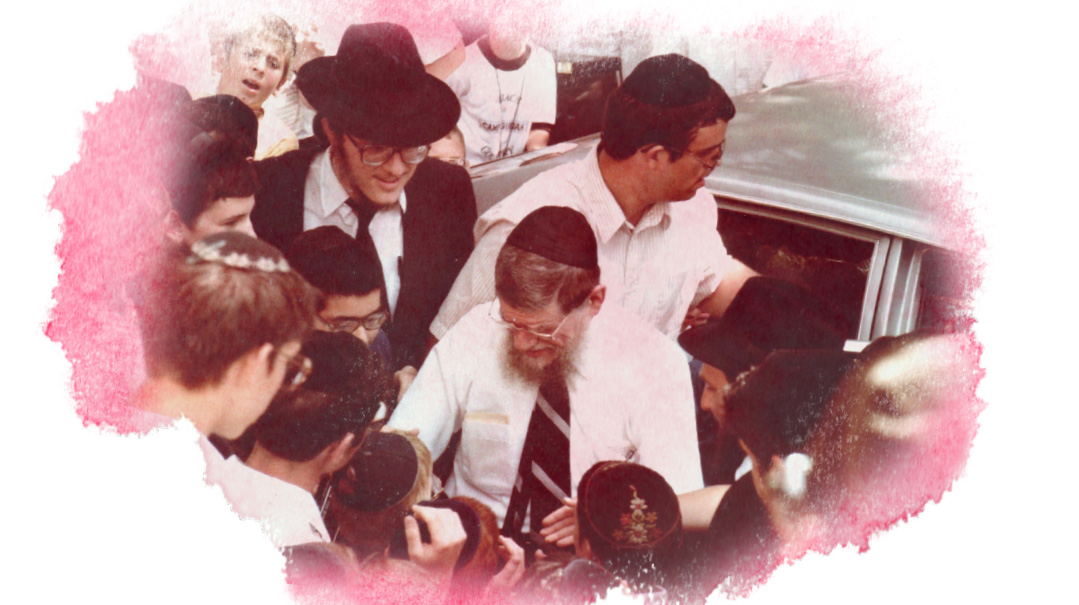

In Play
Rav Mordechai Gifter
Camp Agudah
Rav Gifter halted, and called out in his inimitable accent: “Play ball!”
Interestingly,another Telshe Rosh Yeshivah — Rav Mordechai Gifter ztz”l — once visited Camp Agudah, and upon exiting the beis medrash, noticed that the boys stopped their game mid-play to allow him to pass. Rav Gifter halted, and called out in his inimitable accent: “Play ball!”

They Cared
Rav Shmuel Kamenetsky
Camp Achim
Rav Shmuel and his Rebbetzin noticed — and their walk abruptly stopped.
Every year, Rav Shmuel Kamenetsky, the Philadelphia rosh yeshivah would come visit Camp Achim for an extended period during summer bein hazmanim together with his late rebbetzin. Campers would watch with excitement as the Rosh Yeshivah and the Rebbetzin took their daily exercise walks around the expansive grounds. They strolled briskly, enjoying each other’s company, their ever-present smiles radiating a genuine simchas hachayim.
One year there was a bar mitzvah-aged camper who missed his family terribly and was struggling to contain a severe bout of homesickness. He was sitting on a bench, sobbing miserably, just as Rav Shmuel walked by. Awkwardly, he waited for the Rosh Yeshivah and the Rebbetzin to pass, hoping they hadn’t heard him crying. But they had noticed — and their walk abruptly stopped, both of them taking a seat beside the distressed young man.
They sat with him, explaining that not only it was normal to be homesick, it was even a sign that he came from a strong and happy home. His parents must be missing him a great deal too, the Rosh Yeshivah assured him, and they continued to sit with him until the boy’s tears dried and he was ready to join his friends for a glorious camp day, courtesy of the caring gadol.

Special Connection
Rav Mattisyahu Salomon
Camp HASC
“Please tell Mashiach that I was a friend of Camp HASC”
Camp HASC, that magical place of healing and hope, seeped in ahavas Yisrael and fused by the chesed of staff members dedicated to the precious neshamos of Klal Yisrael, has many traditions. There are the (almost daily) concerts, a calendar full of specialty days, the myriad therapeutic activities executed in signature HASC style — and then there are the visits from gedolim, one of the most cherished parts of the summer. But the campers and staff aren’t the only ones who cherish the visits. For Lakewood Mashgiach Rav Mattisyahu Salomon — may he have a refuah sheleimah — his annual visit to Camp HASC was one the highlights of his year, so much so that his late rebbetzin a”h testified, “he wouldn’t be able to go into Yamim Noraim without it.”
One year the Mashgiach in Camp HASC arrived on Tu b’Av, and a massive kabalas panim was held on the camp’s front lawn. The Mashgiach greeted every single person — camper, counselor, and senior staff member — with a smile and divrei chizuk. They gathered into a semicircle around him, and the Mashgiach looked around at Klal Yisrael’s children facing some of the most severe disabilities, being cared for and loved by a staff who went above and beyond the call of duty.
“I have no doubt” said the Mashgiach, “that when Mashiach arrives, Camp HASC will be his first stop. When you greet him, please tell him that I was a friend of Camp HASC.”

Faithful to the Truth
Rav Shmuel Yehuda Levine
Camp Nageela Midwest
“Rabbi, do you ever struggle with your faith and how do you handle that?”
One day each summer, Camp Nageela Midwest was privileged to host Rav Shmuel Yehuda Levine ztz”l, the late rosh yeshivah of Telshe Chicago. The Rosh Yeshivah would hold a question-and-answer session with the boys, who for the most part were public school students making their way back toward Yiddishkeit. During his last visit to camp before his untimely passing earlier this year, the first question came from a teen who innocently asked, “Rabbi, do you ever struggle with your faith and how do you handle that?”
The staff cringed at the question, yet the Rosh Yeshivah looked at them with his trademark smile. Then he turned back to the campers. “I’ll be honest,” he said. “That’s really not a struggle of mine. I’m a rabbi, my father was a rabbi, and his father was also a rabbi. I come from a long line of rabbis who are dedicated to Judaism and to learning Torah, and I’ve always been surrounded by those kinds of people. And so for me, it’s really not a struggle.”
The campers looked at each other, unsure what to make of this strange rabbi with ironclad faith in front of them. But the answer gave the staff a glimpse into the gadlus of the Rosh Yeshivah. In the smile he gave them before he answered, they saw that he knew he wasn’t about to offer an inspiring answer that would ignite the camper’s faith — but it was the truth. And even if it wasn’t what the camper was hoping to hear, the Rosh Yeshivah’s commitment to the truth was paramount — and that just might have been the greatest inspiration of all.

A Friend Indeed
Rav Yaakov Kamenetsky
Camp Ohr Shraga
“Does the Rosh Yeshivah have time to talk?”
Rav Yaakov Kamenetsky spent his summers in Ohr Shraga. One summer, he was approached by a young boy. While he had no serious halachic queries nor any substantive questions on the Gemara, he wanted to be seen with Reb Yaakov. He went over to him in the beis medrash, waited for him to lift his head up from the Gemara, and asked, “Does the Rosh Yeshivah have time to talk?”
Reb Yaakov looked at him with mock disbelief. “Does a Yid ever have time?” he asked in his heavy Yiddish, before continuing, “Nu, so what’s on your mind?”
The boy went on to engage Reb Yaakov in discussion, keeping the relationship up through the summer, constantly going over to the gadol to share all sorts of mundane things, for the sole purpose of being in the proximity of Rav Yaakov. Rav Yaakov was a towering talmid chacham, but also a marvelous conversationalist, and the young boy relished every minute.
As the years passed and the boy matured into a serious yeshivah bochur, he looked back and realized, with more than a hint of regret, that his behavior had been a bit unbecoming. Yet his discomfort was allayed when he subsequently met Reb Yaakov at a family simchah. A relative waved over the bochur, intent on introducing him to Reb Yaakov. Embarrassed, the bochur lowered his eyes, but as soon as Reb Yaakov noticed him he put his hand on the bochur’s shoulder. “I know this bochur!” he told the baal simchah. “He’s my friend from camp!”

Pumping Them Up
Rabbi Dovid Trenk
Camp Munk
Rabbi Trenk approached the new mother and elatedly relayed what he had seen that morning: “Your Meir! He’s the best daddy!”
For almost half a century, Rav Dovid Trenk, the legendary rosh yeshivah of Yeshiva Moreshes Yehoshua, memorialized in Yisroel Besser’s bestselling Just Love Them (ArtScroll/Mesorah), would spend his summers in Camp Munk. His mere presence and gregarious nature inspired and uplifted scores of campers, staff and their families. But well before the day started, while the camp was peaceful and still and the sun was just beginning to peek over Queen Mountain Road, Rabbi Trenk would get up and spend a few hours enjoying his favorite activity: toiling over a blatt Gemara.
One morning, a couple who had been recently blessed with a baby girl joined their parents in camp for the summer. When the baby woke up crying in the early morning, her father gently put her into her stroller and slipped out of their bungalow, allowing the rest of the family to sleep undisturbed.
The young father strode right past Rabbi Trenk, who immediately jumped up from his seat. “Meir!” he called out excitedly, “you’re the best Daddy! Look at the way you take care of Chaya Esther!”
But he didn’t stop there. Later that day, he approached the new mother and elatedly relayed what he had seen that morning. “Your Meir!” he said. “He’s the best daddy!” The young mother gleefully told her mother what Rabbi Trenk had said about her Meir, lighting up yet another house. Years later, “Meir” recalls the warmth and joy he and his wife felt from Rabbi Trenk’s words, and their appreciation that a Yid whose heart overflowed with ahavas haTorah and ahavas Yisrael took the time to express it.

Picture Perfect
Rav Aharon Shechter
Camp Morris
“It must be that cameras don’t work with film anymore, because it would have run out from all the pictures you take of me!”
Camp Morris serves as the official summer home of Yeshivas Rabbeinu Chaim Berlin, and its rosh yeshivah, Rav Aharon Schechter, spends his summers there as well. Every year, the camp administration arranges for someone to come with a golf cart to pick up the Rosh Yeshivah from his bungalow each morning and drive him to the beis medrash for Shacharis.
The scene — the Rosh Yeshivah bedecked in tallis and tefillin, his regal bearing apparent even in a golf cart, chauffeured to Shacharis against the early-morning pastoral backdrop of the Catskill Mountains — was emblematic of Camp Morris, and Avraham Elbaz, a frequent photographer of gedolei Yisrael, would regularly show up with his camera, trying to get the perfect shot.
On the last day of camp, Elbaz was there, his camera at the ready, when the Rosh Yeshivah’s golf cart came into view. But this morning, rather than whiz by, Rav Aharon motioned Elbaz to come closer. Somewhat surprised, Elbaz approached the Rosh Yeshivah, who wore a wide smile. “It must be that cameras don’t work with film anymore,” Rav Aharon said, “because it would have run out from all the pictures you take of me!” With a touch of humor, the Rosh Yeshivah wished the photographer farewell, leaving him with not just with a beautiful photo — but a beautiful memory, as well.

Matching Mission
Rav Shlomo Miller
Oorah, The Zone
Rav Miller called over a family member, saying, “We have a chashuve bochur here from the Lakewood yeshivah who we need to find a shidduch for!”
One Shabbos afternoon, after delivering a shiur at The Zone, Oorah’s sleepaway camp, Rav Shlomo Miller, the rosh kollel of Kollel Avreichem in Toronto and one of the foremost poskim in the Torah world, was approached by a counselor. The bochur had been looking for his bashert for a number of years now and wanted Rav Miller to give him a brachah.
Rav Miller happily agreed, but first he called over a family member, saying, “We have a choshuve bochur here from the Lakewood yeshivah we need to find a shidduch for!”
After asking the bochur his name and where he was from, Rav Miller pulled over another family member of his who was nearby.
“Nu,” he prodded, “let’s find some connection to this bochur, so we can get working on a shidduch for him.”
After finally finding someone they knew in common — his son-in-law knew the bochur’s brother-in-law from yeshivah — Rav Miller smiled. “Now we have someone to reach out to,” he said.
Later that week, the phone rang in the bochur’s home in Brooklyn; it was Rav Miller’s daughter, and she wanted to suggest an idea to the boy’s mother. That particular suggestion didn’t materialize, but the warmth, care and concern demonstrated by one of the Torah world’s preeminent poskim is a memory the bochur — by now a husband and father many times over — still cherishes today.

Stamp of Approval
Rav Yaakov Yitzchok Ruderman
Camp Agudah
“Ah! Look at these boys!” Rav Ruderman exclaimed with deep satisfaction in his voice.
Rabbi Simcha Kaufman, longtime head counselor of Camp Agudah, invested herculean amounts of energy into giving the campers a wholesome, fun, positive experience. He recalls a conversation he overheard that validated all the effort invested.
Rav Yaakov Yitzchok Ruderman, rosh yeshivah of Ner Israel, had been in Camp Agudah for several weeks when Rav Yaakov Kamenetsky (a cousin of Rav Ruderman) came to visit him. The two gedolim sat talking, watching the boys enjoying themselves, and Rabbi Kaufman, who was standing nearby, overheard the conversation. “Ah! Look at these boys!” Rav Ruderman exclaimed with deep satisfaction in his voice. “If only we would have had such camps when we were younger,” he said, turning to Reb Yaakov, “imagine how many more children would have been brought tachas kanfei haShechinah!”

Coming Prepared
Rav Mattisyahu Salomon
Camp Agudah
The Mashgiach paused a half a minute, squared his shoulders, and looked at the staff member. “I’m ready!”
Rabbi Motty Karfoil, a head counselor at Camp Agudah, fondly recalls the Lakewood mashgiach, Rav Mattisyahu Salomon, coming to camp. Rabbi Karfoil approached Rav Mattisyahu and asked if he could give a shmuess exclusively for the counselors. The Mashgiach agreed, and asked him if he had a specific topic in mind, to which Rabbi Karfoil replied affirmatively.
He went on to suggest that the Mashgiach impress upon the group of counselors that if they filled themselves up with an abundance of ahavas haTorah and yiras Shamayim, their campers would be positively impacted just from being in their vicinity. The Mashgiach heard him out, paused a half a minute, squared his shoulders, and looked straight at the staff member. “I’m ready!” he declared.
“That quick?” asked Rabbi Karfoil, slightly caught off guard. With a soft twinkle forming in his eye, the Mashgiach replied, “I’ve been preparing this shmuess for fifty years!”

Prime Time
The Bobover Ruv
Camp Mesivta Eitz Chaim D’Bobov,
Poconos, PA
The real treat, though, came after Shacharis, when the Ruv made himself available for the bochurim to speak to him — about anything
The Bobover Ruv, Rebbe Bentzion Halberstam, leads his kehillah from Boro Park, Brooklyn, overseeing an empire of chassidus. And while the Ruv is accessible to his chassidim during the year, his availability is subject to the confines of a tight schedule and a demanding agenda, ably arranged by a hierarchy of gabbaim. While the kehillah’s bochurim usually observe their Rebbe from afar, surrounded by throngs of chassidim, conducting massive tishen, or visiting their mosdos with rabbanim and askanim, they know that once a year, he’ll be available exclusively for them. Each summer the Ruv heads up to the Bobover Mesivta camp, his schedule is cleared, and everyone knows: This is when he spends time exclusively with the kehillah’s bochurim.
Reb Ephraim Grunfeld, a Bobover yungerman, fondly recalls the Ruv showing up unexpectedly in camp one day and the excitement it spawned. The Ruv’s surprise visit started quite early. He entered the beis medrash during “fartugs” (the pre-Shacharis) seder, shepping nachas from the kol Torah, his presence offering chizuk to the early-rising bochurim. But the real treat came after Shacharis when the Ruv made himself available for the bochurim to speak to him — about anything. One bochur wanted a brachah, another needed guidance, and a third just wanted to talk. The Ruv happily went for a walk, strolling the grounds with the bochur and allowing him to speak his mind.

Priceless
The Novominsker Rebbe,
Rav Yaakov Perlow
Camp Toras Chaim
“Al pi halachah, you can take them to the supermarket,” the Rebbe said, “but you should take them to the Jewish store and I will pay the difference”
The Novominsker Yeshivah spends summers in Camp Toras Chaim, and the Rebbe ztz”l would join them. Young men eagerly awaited their turn to drive the Rebbe to and from tefillos in a golf cart. One day, the head counselor signaled the driver to stop; he had a question for the Rebbe. He explained that the camp would take staff members shopping off-grounds once a week, and he wanted to know if he was obligated to take them to a Jewish store, where the atmosphere was more refined, but the prices higher, or if it was fine to go to a regular supermarket.
The Rebbe asked the head counselor how much the price difference was, and he said it could amount to hundreds of dollars a week.
The Rebbe instructed the driver to take him to his bungalow, where he took out his wallet and handed his credit card to the head counselor. “Al pi halachah, you can take them to the supermarket,” the Rebbe said, “but you should take them to the Jewish store and I will pay the difference.”
The golf cart continued on its way and the Rebbe said to the astounded driver, “You heard nothing.” And as the young man parked, the Rebbe repeated his warning. “You must not repeat what you just heard,” he said. And the driver kept the story to himself, until the Rebbe passed away.
(Originally featured in Mishpacha, Issue 924)
Oops! We could not locate your form.
RELATED CONTENT

Community-conscious grassroots initiatives are quietly breaking the shidduch bottleneck

Yitzchak Pindrus was headed for Anglo advocacy until the Knesset called him back

Dissidents who survived Iran’s most feared prisons tell Mishpacha about torture, interrogations, and the obsession with Israel

A massive nurse walkout leaves hospitals and patients scrambling for solutions

Do the Pentagon’s fast-food orders really predict strikes on Iran and other foreign flare-ups?

Keeping pace with the times, this outreach model is accruing spiritual returns
