Seat at the Table

As Israeli government reforms to undermine halachah are in full swing, delegates from around the world have come together with the Orthodox Eretz Hakodesh slate in the World Zionist

The skies over the Kosel are still a bright summer blue, but for secular-religious relations in Israel, winter set in months ago.
Since winning power in June, Naftali Bennett’s government has moved quickly on a series of religious reforms that undermine the role of halachah in public life.
Finance minister Avigdor Lieberman has targeted working chareidi mothers with childcare subsidy cuts to strong-arm kollel students into the workforce. Co-prime minister Yair Lapid has vowed to give the Reform movement full access to the Kosel by January — a move that Meirav Michaeli of far-left Meretz characterized as “liberating” the holy site.
All of that is happening because religious political influence is at its lowest ebb in decades. For the first time, no party committed to the defense of Israel’s religious status quo is in government.
Against that gloomy background, a convention thousands of miles away under the thunderous showers of Monsey, NY, provided a path forward.
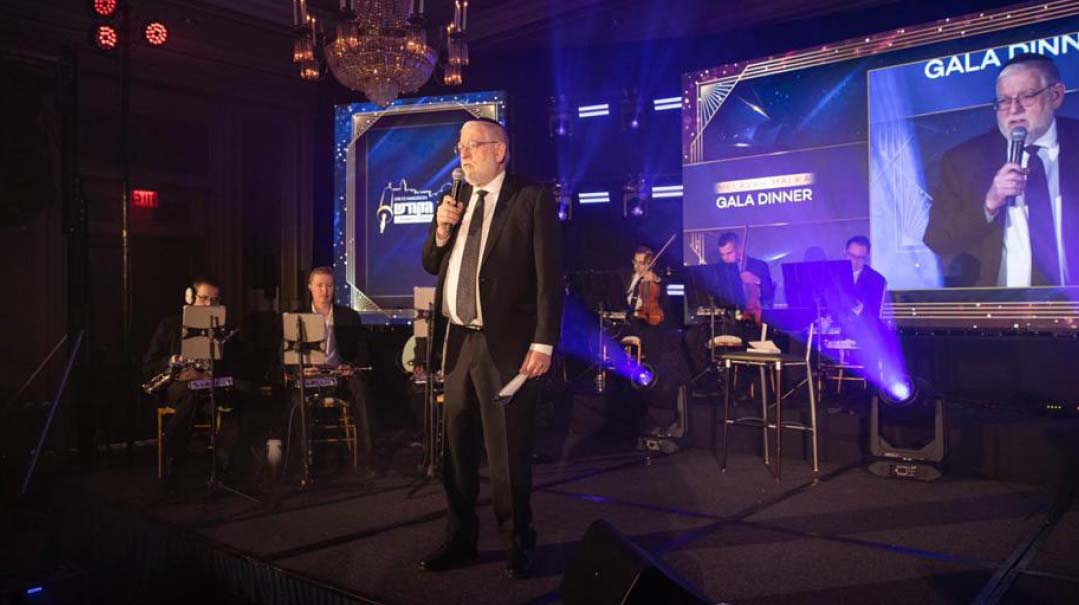
Hundreds of participants from around the world gathered last Shabbos to celebrate Eretz Hakodesh, a movement that has broken the historic liberal control of some of Israel’s most important institutions by giving representatives of American Orthodoxy a seat at the World Zionist Organization for the first time.
The move to open a religious slate in the WZO — a legacy body that gives Jews overseas a say in how massive funds are spent in Israel — has been a game changer in terms of religious influence. Everything from public shemittah observance, to admitting yeshivah bochurim into the country during Covid and defunding the liberal Jewish movements, have been made possible by the movement’s success.
“There’s only a certain amount you can do from the outside — you need a seat at the table of these institutions,” says Eretz Hakodesh founder Rabbi Pesach Lerner. “The 20,000 votes from the frum community in America that came in a few months’ campaign two years ago gave us 20 delegates to the World Zionist Congress, enough to create a revolution and take control back from the left-wing. Imagine what we could do with 100,000 votes.”
Building that kind of base ahead of the next elections in three years’ time is the next goal for Eretz Hakodesh. It requires a delicate balancing act — one endorsed by Torah leaders such as Rav Chaim Kanievsky and Rav Gershon Edelstein — to operate within institutions that contain Reform representation without conferring recognition on them as movements.
It also requires a big tent approach in evidence at the Shabbos events. “There’s a reason you’re seeing shtreimels, black hats, and kippot serugot here in one hall,” says Rabbi Lerner. “That’s because none of us can do this on our own.”

Immediate Gains
Occupying significant chunks of prime real estate in central Jerusalem are the historic headquarters of what are known officially as the mosdot leumiyim, or National Institutions. These are the Mandate-era power structures such as the WZO, the Jewish Agency, and the Jewish National Fund.
Long superseded by the Knesset and government ministries, these institutions still matter despite their dusty images.
That’s because they control vast budgets, to the tune of hundreds of millions of dollars yearly, according to Yisrael Schwebel, who sits on the WZO’s Diaspora Committee for Eretz Hakodesh.
“The Reform and Conservative movements have spent decades getting their hands on millions in funding that is used for making inroads in Israel’s religious status quo,” says Schwebel.
Being part of the decision-making process at the WZO has repaid those American voters immediately. When Covid threatened major cuts on Birthright funding last year, the blow to yeshivos and seminaries — many of whose students get crucial funding — was softened by leverage with the Jewish Agency which administers the funding.
Eretz Hakodesh also had standing with government ministries when it came to getting yeshivah bochurim into Israel’s sealed borders. Eretz Hakodesh director and Igud Hayeshivos head Rabbi Nechemyah Malinowitz, together with Rabbi Zecharia Greenwald, were able to get a seat at the decision-making table to negotiate entry for the foreign students.
And Eretz Hakodesh’s existence has had a dramatic impact on public Torah observance in Israel. For the first time, the KKL — the body responsible for state lands, part of the National institutions that are affiliated with the WZO — is keeping shemittah due to the newfound religious tilt to the WZO.
The young organization’s immediate impact has been enabled by one thing: voting.
“The WZO is a democratic body,” says WZO president Yaakov Hagoel. “Its 500 seats represent the entire spectrum of the Jewish people in Israel and abroad, and until now, the chareidi voice was entirely absent. That meant that the overall policy of the organization was left-tilted.”
Hagoel, a long-term Likud operator, gives the ban on Yehudah and Shomron as an example. “Until now, we couldn’t fund anything over the Green Line, because of the make-up of the WZO. Things have become more centrist since Eretz Hakodesh joined, and the distortion has been corrected.”
A kippah-wearer with relatives in next-door Monsey, Hagoel spent the Shabbos soaking in the musical wonders of Yedidim choir and embraced by the spectrum of the American frum world. “What I see here is America’s religious world getting involved in Israel,” he said over the din of a Motzaei Shabbos Avraham Fried appearance at a gala Melavah Malkah, “and that can only be a good thing.”
Striking a Balance
While the reward for joining the WZO has been immediate, it means sitting around the table with Reform and secular representatives in a forum that bills itself “the parliament of the Jewish people.”
“It was gedolei Yisrael who told us to enter the race,” says Rabbi Pesach Lerner. “Rav Elyashiv’s talmid Rav Yosef Efrati took the question to Rav Chaim Kanievsky and Rav Gershon Edelstein, who ruled that it was a mitzvah to join.”
Participation, he says, wasn’t about securing additional funding for yeshivos, but about limiting the influence of anti-Torah forces in Israel.
“The Reform have sold Israelis the lie that they represent 90 percent of American Jews. But it’s not true. I take Israeli political and media figures to the Five Towns and say, find me the Reform temple and see how busy it is, and then let’s go to frum shuls and see how they’re bursting. And I tell them that you can visit any town in the country and see the same thing — those who are not totally unaffiliated are connected to Chabad in large numbers.”
Knesset member Yitzchak Pindrus, who joined the convention, agrees. “Take a look at the Kosel in Elul, and you’ll see how traditional Israelis are. A million people — many of whom don’t look religious — come for Selichos. According to government statistics, these traditional Jews are more than 20 percent of Israel’s Jewish population. These people want authenticity — they don’t want diluted standards. We’re here to fight for them as well.”
But the revolutionary decision to jump into the democratic game in the WZO has limitations attached. “The reason that Degel HaTorah has not claimed the seats on the WZO allotted to it as a political party is because of the recognition that that would confer on anti-Torah movements by an official body that represents the gedolim,” says MK Yitzchak Pindrus. To achieve the level of access without imprimatur, “the gedolim wanted American Jews to vote.”
That backing was on display again a few months ago when Rabbi Jonathan Guttentag of Manchester, who’s in the process of setting up an Eretz Hakodesh affiliate in the UK, visited Rav Chaim Kanievsky.
The expansion to the UK is taking place in parallel with similar efforts in France, Russia, and Argentina. At stake is not just more votes: According to WZO rules, a slate that is affiliated with Zionist Federations in four countries is granted far more influence.
True to Rabbi Lerner’s big-umbrella philosophy, the international effort now has backing from representatives of different strands of Orthodoxy.
Direct Action
A quarter-century ago, it was Rabbi Moshe Sherer’s Am Echad delegations that brought the voice of American Orthodoxy to the Israeli political table.
That work has gone on fitfully ever since. But the advent of Eretz Hakodesh has created a more direct way of exercising influence that compliments those efforts.
Two weeks ago, a physical clash between Knesset members over the status of the Kosel was narrowly averted. Having smuggled in a sefer Torah for the Women of the Wall’s Rosh Chodesh event the previous month using his parliamentary immunity, Reform leader and Knesset member Gilad Kariv was persuaded by President Herzog to call off a repeat performance because of a threatened clash with religious and traditional MKs.
Now, as the Kosel battle heats up and the Bennett government seems determined to give Reform equal standing in the holy site, American Jews remain a crucial source of influence where wider religious political power has shriveled.
“We don’t have the political power to prevent what this government is planning,” says Yitzchak Pindrus. “But American Orthodox leaders who have Bennett’s ear can influence him. Otherwise, we’ll have an all-out religious war over the Kosel.”
(Originally featured in Mishpacha, Issue 886)
Oops! We could not locate your form.
RELATED CONTENT

Jewish Panama may be known for wealth, but its real treasure is a Torah revival

Rav Yitzchak Biton and his wife, Tamar, have become powerful symbols of faith for a nation under fire

A former financial wiz bridges the gap between virtual reality and eternal content

The Pnei Menachem's youngest child opens a rare window into his father’s mesirus nefesh for his chassidim — and for every Yid


