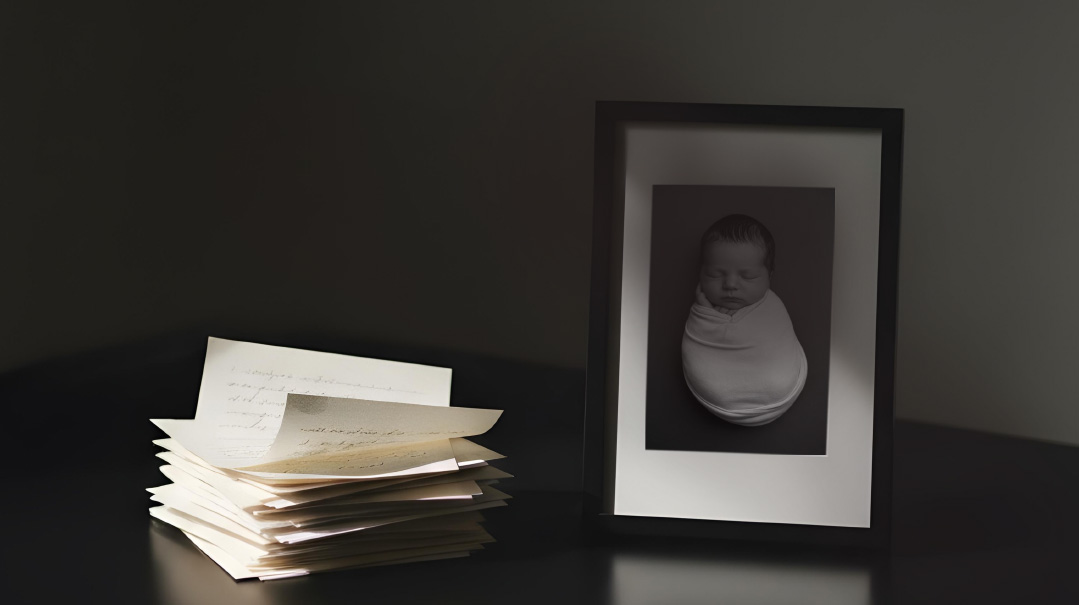
I loved my son for each of the 23 million seconds we had with him
August 27
Dear Shmuly,
You were born 16 days ago, my perfect little boy with radiant skin and a soft fuzz of brown hair. You came into this world on a Sunday evening, and when they placed you in my arms, I almost stopped breathing with wonder.
You’re the oldest grandchild for my parents, and you arrived into a family that’s been waiting for you from the moment I stood under the chuppah.
The funny thing is that five weeks before you were born, Bubby had a baby girl, my youngest sister. For reasons I still don’t fully remember — maybe her breathing was a little fast, maybe they were just being cautious — the doctors sent her to the NICU for observation. Two days later, she was perfectly fine and ready to go home. I went with one of your older aunts to pick Bubby up from the hospital. We were watching Bubby sign papers, ready to leave, when a nurse stopped us.
“Before you go,” she said to Bubby, “you need to do the infant resuscitation training.”
Then she looked at me and my sister. “You two might as well join in.”
I remember shrugging. Why not? I had nothing else to do. I was almost due. I was tired and uncomfortable, and figured I might as well sit down for 20 minutes and watch.
So I sat in that small hospital room with its educational posters and plastic baby dummy and the occasional cry from the babies in the nursery. I wasn’t paying full attention. I remember laughing a little at how strange it felt to practice pressing on a doll’s chest. But it was baby CPR, and I’d always wanted to learn CPR. The steps. The rhythm.
I didn’t know I’d ever have to use what I knew.
Love, Mommy
August 28
Dear Shmuly,
You made me a mother, but I didn’t know how to be one right away. I had to learn, settle into the idea of feeding schedules, sleepless nights, and how unexpectedly slippery you were when I gave you your first bath.
Your bris was a haze of fatigue, joy, and my own tears when I heard you cry.
But it was the feedings that took over my days. You weren’t gaining weight as fast as you were supposed to, so everything revolved around expressing milk, watching the clock, bottles, and numbers on the scale. The midwife kept telling me to make sure you ate, to wake you if you fell asleep. Every two-and-a-half hours, no exceptions.
It was overwhelming, and I was exhausted, so we went to the mother-and-baby home on the beach, about an hour from Manchester. Bubby was there with your aunt, and our bedrooms were right next to the feeding room. She saw the nurse bring you to me, and she came to stroke your soft cheeks and marvel at your tiny features.
“Ma, he’s crying. Let me feed him. You can come back soon,” I told her. She kissed you and left. I settled down with you, but as I was feeding you, you looked like you were falling asleep again.
“No, Shmuly, you need to eat,” I murmured, and I tried to wake you up.
And then I looked at you. Your little body so soft and still.
The first second… you’re asleep. Just asleep.
The second second… he’s not here.
I screamed. I must have torn the heavens apart with that scream.
And then everyone in the room, all the mothers feeding their babies, were yelling. They ran out of the room to get help, and I started doing CPR. I didn’t even think about it, because I knew what to do. I didn’t do it for very long. Once the nurses came, I let them take over and do it properly, but I know that 16 days after I gave you life, I gave you life again.
The nurses worked desperately, and I couldn’t think in words. All I had was searing, hysterical crying. Cold and shaking, trying to get my trembling fingers to call your Tatty.
Finally, 23 long minutes later, they said they had a heartbeat, and the room filled with policemen, asking questions I didn’t understand. The medics said your heart was beating, but breathing was your biggest issue. At first, there was no breathing at all. Then there were gasping breaths, and they hoped that maybe it would turn into regular breathing.
I remember the wail of the ambulance, your frantic Tatty, the medics gently placing you on a stretcher and sliding you into the patient compartment, the crunch of gravel as we careened over 100 miles an hour through the country roads to the nearest hospital. But it wasn’t real. It was a strange, terrifying dream and I just couldn’t wake up.
And then we lurched to a stop outside the ER, and when I tumbled off the seat, there were over 20 people waiting for you. Doctors. Nurses. Later, they told us that one doctor had come down from each ward. The entire hospital stopped. They were all waiting for you, my baby.
In those 23 minutes that your heart wasn’t beating, when we didn’t know if you would come back to us, the unknown was excruciating. I was shivering, speechless, pacing, in a haze. Your life split into before and after in those 23 minutes, Shmuly.
So did mine.
Love, Mommy
August 29
Dear Shmuly,
They sedated you and put you on a ventilator, and then they did a CT scan to see if there was something wrong. Like a dent, or a bruise, or something they could point to and say, Thiscaused it. They never found anything. At one point, the doctors were saying maybe it was cardiac, maybe metabolic. None of it fit.
So the CT scan seemed fine. But then they did an EEG to measure the electric impulses in your brain, and they saw hardly anything. And then there were your eyes. They kept checking your pupils, because pupils should react to light, getting bigger and smaller. Your eyes didn’t react.
“Do you want to come see him?” a nurse asked after the CT scan was over. You were pale, but alive, and I felt my frantic heart slow down.
“He’s going to be severely brain-damaged,” they told us, over and over. “We don’t know the extent. We can transfer you to an intensive care unit where you might get more testing and more answers, or you can let go.”
That was the first thing they said, Shmuly. That was the choice they gave us.
While we were still in the emergency room, we called MARS, the Medical Advocacy and Referral Service, an organization from London that does medical advocacy in the Jewish community. It was the summer holidays, with families vacationing all around the UK. Rabbi Glick from MARS answered the emergency line, and since he was in Wales, only a half-hour’s drive from us, he came straight to the hospital to be with us. He explained things in a way that made sense: what your injury was, what it wasn’t, what the scans might show, what they probably wouldn’t.
But there was no time to process anything, because everything was moving, shifting, the ground ripped out from under our feet again and again. Things went from “Maybe he could recover,” to “What are you doing next?” in a moment.
And the night shift doctors kept repeating: “Your little boy is very poorly. He’ll never be the same boy again.”
I felt so disconnected and numb, like I was floating far from the machines and the doctors and the monitors. Before they got your heartbeat back, I remember thinking: Okay. I had a child, but he’s not alive. Then they got your heartbeat back, and I thought: He’s going to be different, not the child I imagined. He’ll be special. There will be limitations, but Hashem gave Shmuly to me, and I’ll love him no matter what. I’d worked with children with special needs, and I’d learned to love those precious neshamos. I could handle that. What I couldn’t handle, what I was terrified of, was you dying.
You were still so new, and I didn’t fully feel like your mother yet. I loved you, but sometimes I felt more like a babysitter. Or your friend. I couldn’t really connect.
Even in that fog, I knew I wasn’t ready to say goodbye.
Love, Mommy
September 4
Dear Shmuly,
The hospital said they couldn’t keep you. You needed an ICU, and we transferred to Alder Hey Children’s Hospital. We’d called people we trusted, and they told us: If they’re offering Liverpool, go to Liverpool. It’s an excellent hospital, and we quickly saw that they deserve their reputation.
We arrived in Liverpool to begin an endless day of testing, seeing social workers, and listening to the undetermined medical results. They told us we had to wait for your MRI to be done between 48 and 72 hours after the injury, to let your brain settle. It was Tuesday night when you almost died, so the MRI was scheduled for Friday morning.
They took you down to radiology for 20 minutes, then they brought you back upstairs. The images were instant, but the interpretation wasn’t. All the neurological consultants had to meet and discuss you together. Finally, about two hours before Shabbos, they came back.
I hadn’t slept in days; I was so tired I couldn’t see straight. But we had to know what was wrong, Shmuly. Zaidy came so we wouldn’t have to face the doctors alone.
We sat around a table in a gray office and listened to the grim words that would define your future. They explained that your brain stem was intact, which meant this wasn’t brain stem death. But your thalamus and hypothalamus were severely damaged. Those are the parts of the brain that control almost everything. You probably couldn’t hear or see, touch or move. They showed us the scans, and I struggled to make sense of the gray blobs.
A “severe hypoxic-ischemic brain injury.” Not like a car accident, where someone can be in a coma and then recover. You had oxygen deprivation. Blood flow loss. Parts of your brain died. But they also said that newborns are resilient, that sometimes their brains can create new pathways. Other parts of the brain try to compensate when one part doesn’t work.
“We’ll take him off the sedation and see the extent of the damage and what exactly is affected,” one of the doctors told us.
Slowly, they took you off sedation, took you out of the drug-induced coma. Shmuly, Tatty and I were next to you the whole time, hoping and davening for any sign of recovery — stronger breathing, eye contact, a cry, something. We looked at your beautiful face, and I cried, willing you to breathe.
That was when I finally started to grieve, as my heart melted with the desire to hear you cry again… even one whimper.
Nothing happened. You didn’t do anything. You couldn’t breathe on your own. When they tried to wean you off the ventilator, alarms sounded, and you were re-intubated. You needed machines to keep your airway open and suction you because you couldn’t cough or swallow.
Still, I clung to the only thing that I knew for sure: You were still with us.
We stayed by your side, whispered your name, and touched your tiny hands. And we waited.
Love, Mommy
September 18
Dear Shmuly,
The next week, Monday, Tuesday, Wednesday… we met with doctors every single day. Every day the neurologist would come, along with the intensive care team, and they’d sit down with us.
Some days they were more compassionate. Some days less. But most of the time, the message was the same: “Call the family together to say goodbye.” “Move on.” “Take him off life support.”
The following week was more meetings, Monday, Tuesday, Thursday, Friday. In the middle of the painful chaos of our lives, I asked for one day.
“Wednesday he turns a month old. Please don’t schedule meetings that day.”
You were our oldest son, our bechor, and you were thirty 30 days old. We didn’t know if you would survive, but we had your pidyon haben. My father asked an older, respected Kohein to come to the ICU, and we had a small, quiet celebration. Me, Tatty, and the Kohein. Your aunts and uncles lovingly packed little bags with sugar and garlic and sent them over. That afternoon, I hired a professional photographer to come to the hospital to take pictures.
It was the first time I was allowed to hold you in days, the first time you felt like a regular newborn again, not a hospital baby. I cradled you in my arms the whole morning, and then again in the afternoon for the pictures. It was beautiful. Sometimes we have celebrations, and we’re so busy with food and guests and déecor that we forget what the event is. But the essence of a pidyon haben is five silver coins, the father giving them to the Kohein and saying, “Give me my child back. I want to redeem him.”
That was when you really became ours, Shmuly.
After days of hearing that you would never recover, that your condition was hopeless, this was one day when we just celebrated you.
The nurses stood on the other side of the room and watched while we documented every moment, captured the beginning of your life in the hospital.
That night, one of my aunts texted me: Sending you extra hugs tonight, today must have been really hard.
She thought your pidyon haben was the hardest day of our week. She didn’t know how relieved I was to spend the day with you, to have one day without meetings and people trying to tell us you weren’t worth keeping alive. I didn’t need extra hugs that night. The whole day had been one big hug.
Love, Mommy
September 29
Dear Shmuly,
The next week, Monday, Tuesday, Wednesday… we met with doctors every single day. Every day the neurologist would come, along with the intensive care team, and they’d sit down with us.
Some days they were more compassionate. Some days less. But most of the time, the message was the same: “Call the family together to say goodbye.” “Move on.” “Take him off life support.”
The following week was more meetings, Monday, Tuesday, Thursday, Friday. In the middle of the painful chaos of our lives, I asked for one day.
“Wednesday he turns a month old. Please don’t schedule meetings that day.”
You were our oldest son, our bechor, and you were 30 days old. We didn’t know if you would survive, but we had your pidyon haben. My father asked an older, respected Kohein to come to the ICU, and we had a small, quiet celebration. Me, Tatty, and the Kohein. Your aunts and uncles lovingly packed little bags with sugar and garlic and sent them over. That afternoon, I hired a professional photographer to come to the hospital to take pictures.It was the first time I was allowed to hold you in days, the first time you felt like a regular newborn again, not a hospital baby. I cradled you in my arms the whole morning, and then again in the afternoon for the pictures. It was beautiful. Sometimes we have celebrations, and we’re so busy with food and guests and decor that we forget what the event is. But the essence of a pidyonhaben is five silver coins, the father giving them to the Kohein and saying, “Give me my child back. I want to redeem him.”
That was when you really became ours, Shmuly.
After days of hearing that you would never recover, that your condition was hopeless, this was one day when we just celebrated you.
The nurses stood on the other side of the room and watched while we documented every moment, captured the beginning of your life in the hospital.
That night, one of my aunts texted me: Sending you extra hugs tonight, today must have been really hard.
She thought your pidyonhaben was the hardest day of our week. She didn’t know how relieved I was to spend the day with you, to have one day without meetings and people trying to tell us you weren’t worth keeping alive. I didn’t need extra hugs that night. The whole day had been one big hug.
Love, Mommy
September 29
Dear Shmuly,
You were six weeks old when Uncle Moishy got married in Yerushalayim.
I was prepared to not be able to go, but you always had someone watching you, and a nurse was always keeping an eye on your ventilator. Tatty’s parents came to stay with you, and I knew you would be safe.
I left on Motzaei Shabbos. Flew overnight, arrived in Yerushalayim in time to grab a short nap (which I’d learned how to do in the hospital), get my dress steamed, and have my makeup done. Then I went to the chuppah.
When people came over to me to ask about you, I said, “Do you want to see pictures of him?” It was easier to be separated from you when I could hold your picture. I was so proud to show you off, Shmuly.
I left right after the wedding but came back to Eretz Yisrael a few days later for the shevabrachos, because I needed to go to the Kosel. Thursday morning, the sky was pure Yerushalayim-blue and the sun washed over the Kosel as I stepped toward the stones. Closer, until I was touching the smooth coolness of the wall. And I felt something breaking open inside, because here was a place I could cry.
I looked up at the sky, and the tears came. I missed you, Shmuly. And I just let out everything that was happening, the pain, confusion, and grief. I didn’t have anything to say, couldn’t bring myself to write a kvittel. All I could do was sob.
I don’t know what You want from me, Hashem. This is too much for me. Give me the strength I need to get through this. Please, I’m giving over everything to You so You can carry this.
And then I remembered the pictures of you that I always carried with me. I took one out, the one where you were dressed in a gorgeous white outfit, your face so sweet and calm. I put it in the Kosel. Your angelic face in the holiest place on Earth.
“Hashem,” I whispered. “I’ll do my best to do Your Will and look after the child You gave me.”
Shmuly, you were my kvittel, my tefillah, and my promise.
Love, Mommy
October 22
Dear Shmuly,
You were living on life support, and according to the way things work here in England, on borrowed time.
We were always meeting with doctors, feeling the pressure of their grave diagnosis. They couldn’t see you, Shmuly. They saw someone who couldn’t do anything, who had no reason to survive. They didn’t value your every heartbeat, every moment you stayed alive.
The doctors thought we were in denial, that we disagreed with their diagnosis. They thought we were hoping for a miracle.
We understood that you were never going to get better. What we couldn’t do was end your life.
We were in touch with daasTorah the entire time, and we were told that we couldn’t actively shorten your life. That we have to extend your life as much as possible. That was what we kept repeating, what we held on to throughout the journey.
But we didn’t hold it alone. Rabbi Grunfeld came from MARS to help us, and so did Rabbi Glick, speaking to the doctors, sometimes with us, and sometimes without. They tried to help the doctors understand that we place a premium value on life.
There were also two Leitner uncles and an Ehrnfeld cousin who shouldered the weight of our situation, acting as our primary askanim, attending all the meetings and decisions. With guidance from dayanim, rabbanim, medical askanim, gedolim, and legal experts, they helped us navigate an impossible system. There were so many people who fought for you and for every second of your short life, taking on the medical burden so I could be your mother.
From the beginning of the emotional roller coaster that was your life, three things anchored us:
The strong support we received from family, organizations, and askanim.
The strong relationship we forged with the staff in the ward. They weren’t the ones we battled. They were the ones who loved you, cared for you, and brought so much light into every day. We made sure to give them gifts and show them how much we appreciated their devotion to you.
And the main thing that held us together? We realized that everything we did to fight for your life was because that was what Hashem wanted. We had to fight for your precious Yiddishe life, and we also had to accept that the outcome was not in our hands, but His. That the courts were not in charge, but Hashem. And if He decreed an end to your life, it was His Will, not theirs.
Even with all the help, I did have to meet with the doctors very often, and it was hard. There were so many emotionally charged (for me) meetings, I don’t know how they had time for them all! When you’re alone with doctors, they have the upper hand. They can say things in a certain way, and all it takes is a small nod, and they take that as consent. We needed people with us who understood the medical terminology, who could push back, who could say, That’s not what she meant. That’s not what we’re agreeing to.
Every day, they told us to let you go. And every day, we said, not yet.
Love, Mommy
November 3
Dear Shmuly,
After Succos, with our legal team formally established, I began to settle into my role as your mother, not just reacting to every new crisis, but living with you.
I learned that acceptance is not the opposite of hope. Emunah is believing that this is what Hashem wants from me right now, and bitachon is knowing that Hashem can change everything at any moment. I tried to carry both.
I chose to create a life together with you in the hospital. The outcome was never in my control, but your space, your day-to-day routine and care, was.
I decorated your space to make it bright and inviting. Your uncles and aunts sent you cards that we hung in a colorful crowd at the foot of your bed. I bought you the most beautiful clothes to wear as you grew, and we took pictures. Every month, we did something extra special and dressed you in an outfit to match. You had a soft, plush bunny that gazed at you with brown button eyes always faithfully at your side. It became your mascot. (And when it mistakenly disappeared while your sheets were changed, I asked a nurse to go through the laundry to find Bunny… who was thankfully returned!)
It became a “thing” in the ward. You were one of the only long-term patients, and you became the firm favorite of every nurse on duty. Halfway through the month, the staff would ask, “What’s he wearing for the next picture?” And I’d say, “Wait and see.”
They loved dressing you in your sweet clothes, carefully working around all the wires and tubes. You had a whole team of people who wanted you to look your best, Shmuly. Who saw a little boy who deserved to be dressed nicely and photographed and remembered.
I memorized you, from the cleft in your chin to the way you sometimes made jerky movements from brain signals gone wrong. I started to know you as a person, and that’s when you became real to me.
Love, Mommy
November 11
Dear Shmuly,
Today, the ICU consultant helped us take you outside for the first time. Connected to monitors and a bagging circuit (a hand ventilator), we wheeled you through the heavy doors, and it was like escaping prison. For a moment, you were just a baby outside.
I remember the sun on your face, Shmuly. The way the light and fresh air touched your soft skin. I could see the sky above us instead of hospital ceiling tiles. We weren’t surrounded by machines and beeping and fluorescent lights. We were a family outside on a beautiful day.
The nurses coordinated everything because they knew how much it meant to us. They told us how important it was for us to make memories together, and they tried to arrange times we could treasure as a family.
The hospital overlooks a park, and from the helicopter pad we could see the green space below. Behind the majestic building, the sun was bright. You seemed so relaxed, and you looked adorable in a new little bonnet. Tatty was there, and it was a beautiful family moment. Sweet and fleeting, we dreamed it might happen again.
It never did.
But that day, when we got back inside, I could still feel the sunshine.
Love, Mommy
February 5
Dear Shmuly,
Today we attended a full-day meeting to work out the legal aspects surrounding your care. Here in England, they don’t place a high value on life that isn’t “productive.” Under UK law, if a patient is dependent on life-sustaining treatment without the prospect of significant recovery, it’s often judged to be not “in their best interests” to continue. These life-or-death decisions end up in the hands of NHS trusts and the courts. So even though every breath you took — with the help of the ventilator — meant the world to us, we knew we wouldn’t be able to fight the NHS forever.We didn’t want a court case, so Tatty and I, along with our legal team, went to many meetings as we tried to work out an agreement with the hospital administration through the courts.
Today I had to join an in-person meeting.
Last night I slept at home and noticed an empty picture frame I’d bought before Tatty and I got married. The placeholder paper read: Today is a good day. And I thought, Today is a good day, but tomorrow can’t be.
But tonight, after ten long, long hours of discussion, migraines, exhaustion, and the brick wall of a quickly-going-nowhere back-and-forth, I looked at that frame again and realized: Good is relative. Our situation isn’t great, and it looks like we’re going to have to take your case to court, but there are moments of goodness and even humor and laughter laced through all the frustration.
I’ve tried to notice the small hugs Hashem sends. That moment of sunlight on your face. The nurse who gave me a birthday card with your footprints. The friend who texts at exactly the right time.
Small hugs, but when I look for them, I find them.
Love, Mommy
February 11
Dear Shmuly,
I’ve watched you grow from a tiny newborn to a sturdy, chubby baby. I’ve seen your hair grow, your feet pushing against the end of last month’s stretchie. I didn’t know how much time I had left with you, so when you turned six months, I wanted to celebrate the gift of having you for so long. I wanted to do something different. I’d seen the idea of a half-birthday, and I thought this might be the only birthday we ever celebrate with you.
So we did.
I planned your half-birthday for weeks with Camp Simcha UK. We decorated your entire room with colorful banners, streamers, and pretty bows, ordered custom cookies, two half-birthday cakes, two new outfits, and gifts. The hospital photographer from the memory-making team came to preserve the memories. Mostly, we cuddled you and enjoyed you the whole day.
We wished more people could come celebrate with us, but the messages from friends and family gave us strength. Isolation, and being far from our community, was one of the hardest parts of those months.
But it was the best day, Shmuly.
You had your birthday. We celebrated you.
Love, Mommy
March 28
Dear Shmuly,
You were physically healthy, Shmuly.
True, you were dependent on a ventilator to breathe, and you had an NG tube giving you the nutrition, vitamins, and medication you needed. But your body was strong. You rarely suffered infections, which was unusual in the ICU.
You could do very little. You couldn’t breathe or move. You couldn’t see, hear, cry, smile, eat, sit, or cough. You didn’t meet any milestones. Your life was like a still image — you looked pretty and put together… and frozen in time.
But you were deeply loved.
My days followed a rhythm. I’d walk down the long hospital corridor, open your blinds to let the sunshine inside, greet your nurse, and hear about how your night went. Then I’d play davening music and sing along, trying to daven beside you.
Bath time came next, complete with bubbles, towels, lotion to smooth on your skin, and gently combing your lengthening hair. Choosing your bedsheets was always an adventure; neutral aesthetics were not always possible when dinosaurs were involved, but I tried! Then there were your outfit, socks, blankets, and stuffed animals to prop nearby. You were perfectly dressed. I have pictures from almost every day, and you almost never wore the same outfit twice.
I would sit next to you, stroking, singing, talking, and telling you how much I loved you, bringing messages to you from friends and family.
The ICU was a hectic place and emergencies were constant. So I mostly stayed as close as possible. But when things quieted down, sometimes the nurses would let me hold you, as snug and warm as I could with all the tubes and wires attached to your body.
My favorite time was at night, when the unit (usually) quieted down. Tatty said Shema with you, while I sang Hamalach, tucked you in, and kissed you good night. I would sit by your bedside for hours, stroking your hand, just looking at your angelic face. The gift of a white-noise machine became part of our world, softening the sounds outside.
You were my safe space, Shmuly.
Fridays were special. Bubby and Zaidy began visiting every other Friday. Yom Tov was always an event. We decorated the room for every Yom Tov and celebrated as best as we could. On Purim, I dressed you up as a bunny, and we handed out heart-shaped candies stamped with the words “Somebunny loves me” to our family and friends and the hospital staff. Once the hospital allowed more visitors, your aunts and uncles took turns missing school to visit you. They glowed with pride as I snapped pictures of them smiling by your bed. Friends came, too, sitting with you for hours that felt like minutes.
They came to see you and be with you and know you… and love you.
Love, Mommy
June 30
Dear Shmuly,
The court process dragged on longer than we expected; hearings were postponed, and dates kept getting moved as we struggled to reach an agreement about your long-term care — with the hospital denying that you had quality of life, and we insisting that your very existence was valuable.
First the hearing was pushed off until after Pesach. Then after Shavuos. When I heard about the latest delay, I said, “It looks like Shmuly’s going to live through all the Yamim Tovim!” It was another hug from Hashem, a confirmation of your life.
But I knew the end was coming, and instead of feeling robbed, I felt grateful. You could have died right away, Shmuly. Or much earlier. Every extra day was a gift. And we chose to accept it.
The finalized legal decisions included one week so we could say goodbye properly. The family came. Grandparents. Siblings. Aunts. Uncles. Friends. We captured those moments with you.
But the uncertainty was crushing. We didn’t know what would happen once the ventilator was removed. Would it be peaceful, or would our time together be punctuated by alarms ringing as you struggled to breathe? Would it be minutes? Hours? How long would we have to cherish the last few moments?
Nothing was certain. But I bought you a final set of soft, cuddly pajamas, and you stayed in them until the end.
By the time Monday came, I was prepared — at least intellectually — to give you back. Nothing could prepare my emotions. The pain I carried in my heart was excruciating, stealing my breath at the thought of losing you. But we’d been living in the shadow of this goodbye for months, and I wanted the moment to be as perfect as possible. Tatty and I were in the room with you, and everything was calm and gentle.
The hospital wanted to extubate you, but doing that could have caused you to die immediately. We needed to make sure you had a chance, so we worked to create a plan that would reduce your support gradually and safely. With the help of our supporters, the court honored the Torah way of doing this transition, avoiding immediate death.
The doctors switched your ventilator to a CPAP mask (a machine that gently pushes air into your lungs to help you breathe) and helped keep your airway open. They reduced your breathing support slowly and carefully, only when they thought you could handle it.
In the end, you surprised everyone, Shmuly. You breathed on your own for nearly ten hours.
For the first eight hours, you were perfectly calm. I held you the entire time, listening to each breath. For the first time since you were a newborn, I could see your whole face… no tubes or machinery covering you. And that’s the picture I remember.
One striking detail about your life is that the timing of your birth, cardiac arrest, and passing, all took place at night, the start of the new Jewish day. Every day of your life was complete. The 16 days before the hospital and the 307 days in the hospital, 323 days in total, were all whole.
In the final two hours, you struggled for breath. I held your hand and stroked you as the sun set and the sky turned pink behind you. I whispered Shema, faltered through Hamalach, and sang softly.
And then, peacefully, you passed away.
I was there the whole time. I was always there.
We fought for you all the way, Shmuly. And in the end, you fought for yourself.
Love, Mommy
August 17
Dear Shmuly,
We’re home again, Shmuly. I can sleep in my own bed and eat food I prepare myself. Shivah is over and life is quiet after all the tension and despair of the last couple of months. I find myself avoiding small talk and people who don’t know what to say. Sometimes, I just want to get away from the world.
It’s too quiet here, back in our house with no baby. Your pictures are displayed, and your bunny sits alongside them. His brown eyes now gaze at me when I look at your picture, just like he used to look at you in your hospital bed.
I miss you. It’s hard. Shmuly, you never came home. We went to Bubby and Zaidy right after you were born, so I was never able to put you in the crib we bought, or rock you to sleep on our couch. There is very little in our house that reminds me of you, nothing that smells like you, nothing you touched. I’m not afraid of reminders, but about forgetting.
It feels like there’s nothing to look forward to. I’m holding on to the memories, to the Yamim Tovim when we had you, living in the past while wondering about the future. When I lost you, I lost my baby, and I also lost my role as a mother. Even your name has been taken from me — you are now Shmuel Avraham ben Yissachar Berish, not Shmuel Avraham ben Hinda.
It hurts. I used to call the nurses and say, “Hi, it’s Shmuly’s mom. How is he?” Or they used to say, “Hi, Mom!” when I came to your room. You don’t realize how much you cling to a word until it disappears. It’s a strange, bittersweet experience, being a mother without motherhood.
But I was your mother every moment of your short life.
When you were nine months old, we hung up your picture with a plaque that said:
You have been loved for 9 months,
39 weeks,
274 days
6,574 hours
394,462 minutes,
23,667,714 seconds —and counting.
We held on to every one of those 23 million seconds, and we treasured them all.
Love, Mommy
October 10
Dear Shmuly,
Throughout your life, when I was desperate to do something for you, I wanted to share your story. But once you passed, I felt calm. Part of me wanted to keep you and your story close to my heart. But Zaidy once explained the difference between “living” and “existing”: Existence is taking up space and consuming resources, while living means giving back to the world.
That’s why I am sharing your life with others.
You taught me so much, Shmuly. Through hope and pain and struggle, I learned to walk the corridors of life with heart and humor. I carried a weight most people will never touch, loved you through suffering no mother should endure. I met Hashem in the darkest hours and touched the edge of life and heartbreak.
As the weeks pass since you left us, I’ve learned that resilience is finding meaning. Getting dressed in the morning, going for a walk, listening to music, and finding the strength to give.
You taught me all this, Shmuly. You, who couldn’t speak or see or move or hear or smile or cry. You showed me how to love unconditionally. To fight without hope of victory. To find joy in darkness. To feel Hashem holding me.
The words from the Akeidah float in my mind… Es bincha, es yechidcha, asher ahavta. Hashem asked Avraham to give Him, “Your son, your only one, the one you love.” He asked me the same. And I returned you to Hashem as pure as you came, on the Mizbeiach where you lay for ten months.